23 Best Timber Planter Boxes for a Natural Look That Lasts
Timber planter boxes instantly add warmth and structure to awkward corners of your balcony, patio, or garden. I love how their wood grain, simple joinery, and weathered hues make even small spaces feel intentional. Whether you’re highlighting leafy plants or keeping herbs nicely organized — timber boxes age gracefully, gaining character over time.
Below you’ll find a curated set of timber planter box ideas — from sleek modern styles to rustic troughs and compact balcony-friendly designs — aimed at inspiring your next garden project.
My Top 23 Timber Planter Box Inspirations
Here are 23 timber planter ideas I adore. If you spot one you love, save it for later inspiration:
1) Honey-Brown Timber Planter Boxes
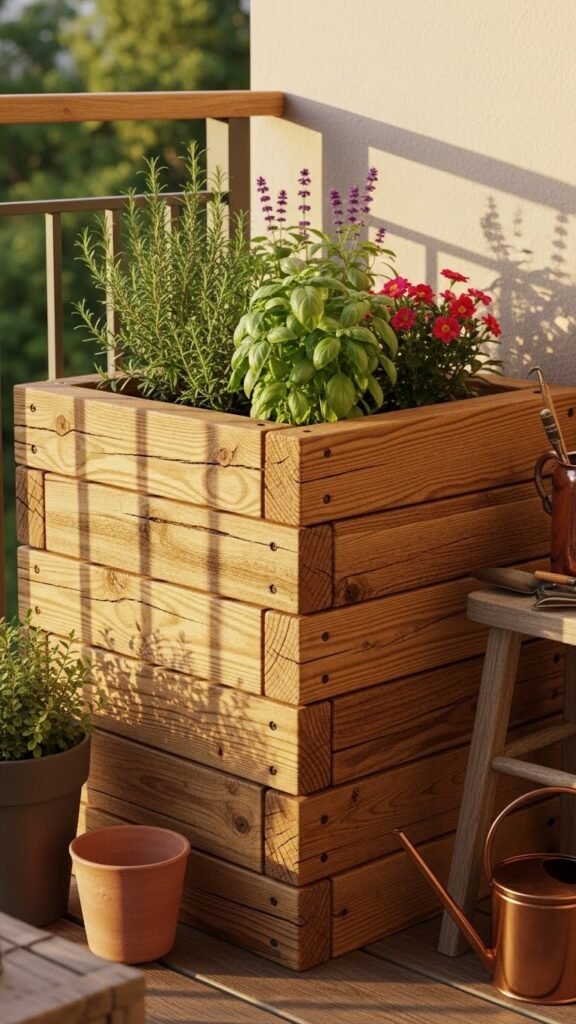
These boxes boast a chunky, weathered charm. Thick planks and visible wood grain give them a sturdiness and no-nonsense practicality that I find really appealing.
Use a simple planting scheme for a clean, editorial vibe — perhaps repeating a single kind of plant — or mix textures: rosemary, basil, and a few vibrant annuals for bursts of color. Add a terracotta pot or two, a copper watering can, and maybe a small stool for tools — instant cozy corner. Throw in slate plant markers and some soft string lights for a garden-party feel in the evening.
2) Natural Pine & Minimalist
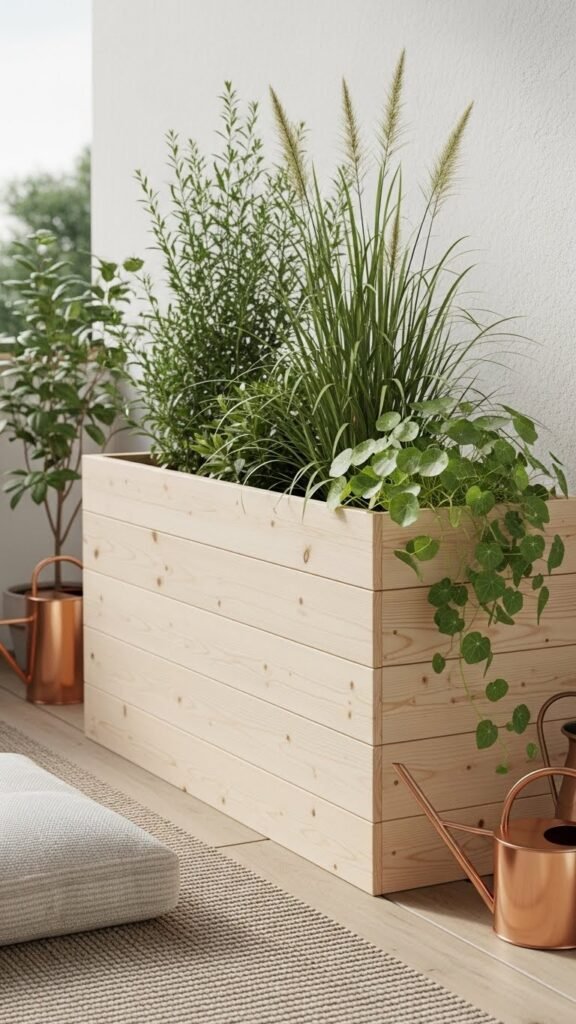
These boxes shine with a clean, honest aesthetic. Their long rectangular shape offers plenty of planting space, and the raw wood grain balances a cozy and modern look.
Style them with simple textures: a copper watering can, a couple of terracotta saucers, maybe a woven seat cushion nearby for relaxed potting sessions. At the back, plant taller greenery like rosemary or ornamental grasses, and in front, softer trailing plants like nasturtiums or sweet potato vine to soften edges. You can leave the wood natural to fade under the sun or go for a charcoal stain for contrast. Minimal effort — big impact.
3) Weathered Dark Timber Planter
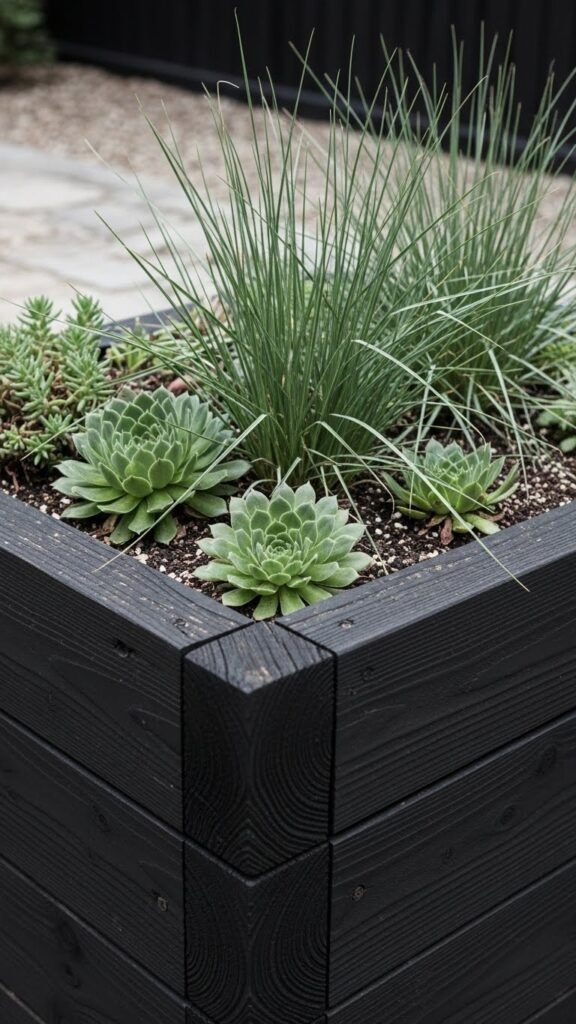
These evoke the feel of aged outdoor furniture. Rough, grained wood with a deep, dark hue feels timeless yet luxurious.
The soft, rounded silhouettes of succulents set against angular grasses create a gentle contrast that feels quietly sophisticated. Opt for low-water plants to keep things easy and effortless.
4) Natural Timber Planter
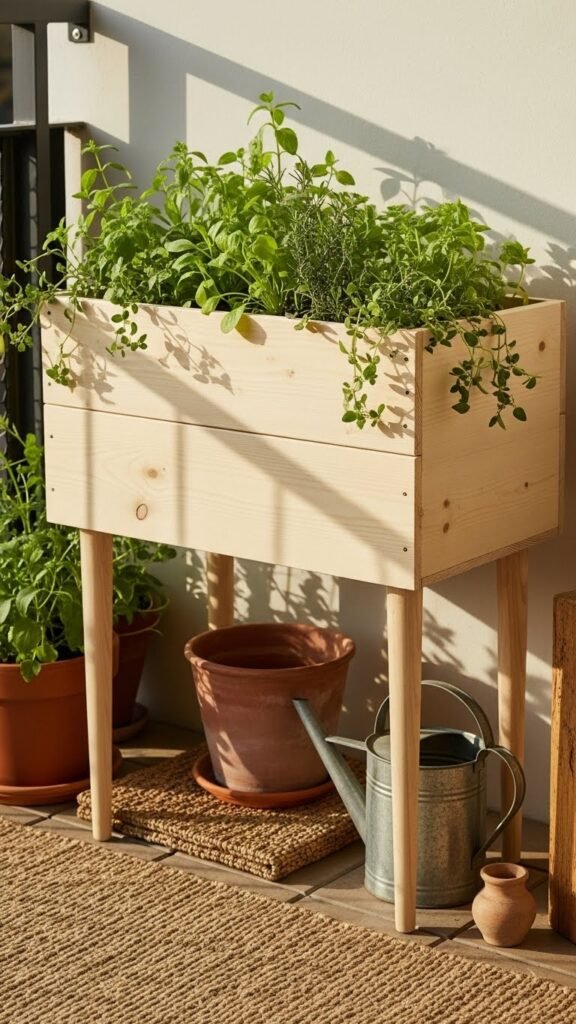
There’s a calm, laid-back vibe to these planters. Warm untreated wood and slim, tapered legs lift the box off the floor — perfect for making a small balcony feel curated instead of cluttered.
The depth lets you mix leafy greens and herbs, giving a slightly wild, unstructured look — exactly the kind of effortless garden I love. Add simple touches: a woven mat, terracotta pots, and a timeworn watering can. A few trailing herbs soften the edges — and sprinkling warm string lights or lanterns makes the spot cozy at night.
5) Dark Stain & Lush Greens
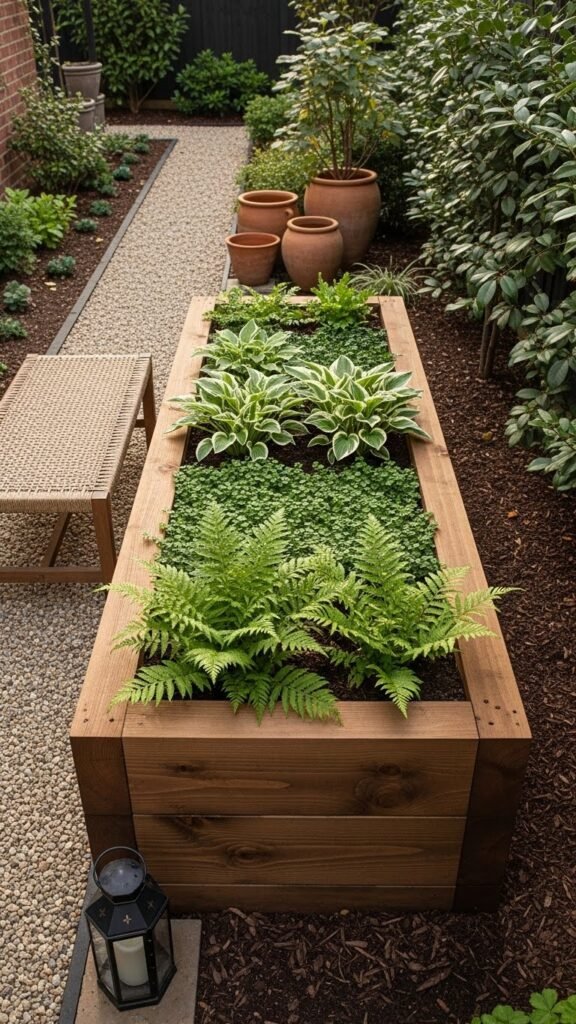
With rich stain and robust boards, these planters deliver a polished yet cozy mood. The deeper beds let you layer plantings: feathery ferns up front, variegated hostas mid-way, and low groundcover finishing the soil line so it never looks bare.
The joinery feels solid and honest, and dense planting with mulch yields a lush look — perfect for breathing life into a narrow side yard. Style with a slim gravel path, a woven bench for relaxing, a pair of terracotta pots for height contrast, some low lanterns for nighttime glow, and a watering can for charm. Let leaves spill gently over the edges for a soft, organic finish.
6) Sunlit Golden Wood
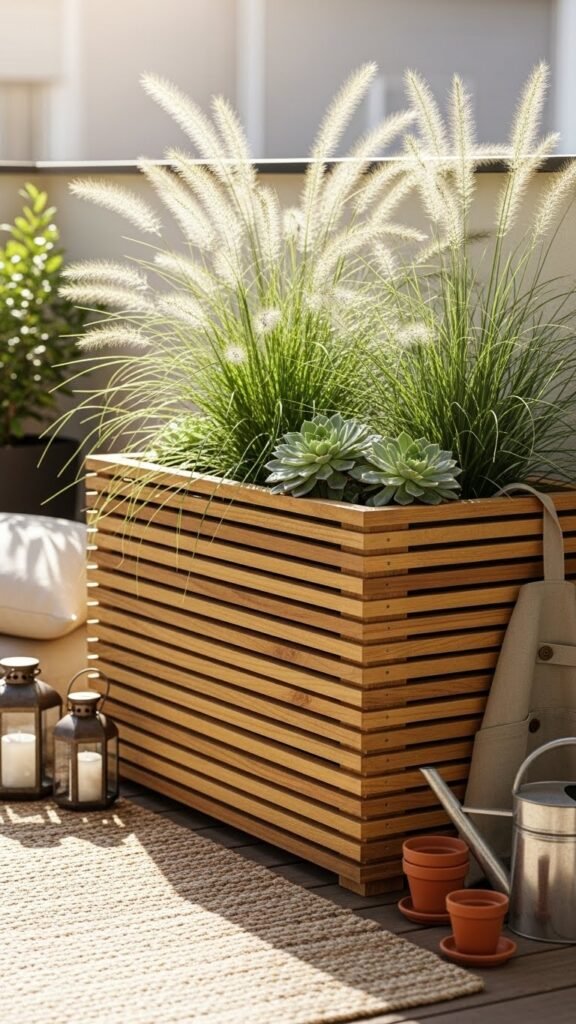
These planters glow with their warm honey tones and crisp, slatted lines. They manage to be both modern and homey — like something scrolled for inspiration, then forgiven for any DIY wobble.
I love filling them with airy fountain grasses catching the light, wispy seed heads for vertical interest, and small rosette succulents for contrast. Simple styling — perhaps a woven rug and a couple of lanterns for soft evening ambiance, or stacking two at different heights to add structure. A gravel mulch, a few small terracotta herb pots, a metal watering can and a folded canvas apron nearby round out the look. Pair with pale-wood seating or wicker chairs and let the grasses do the breezy work — you’ll look effortlessly relaxed.
7) Dark Brown Timber
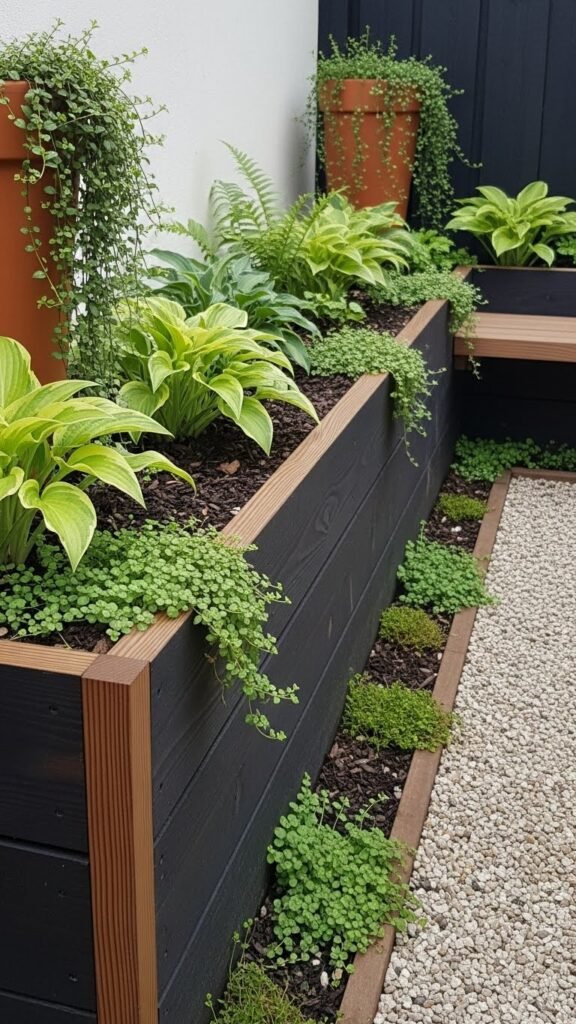
These deep-stained boxes hit the sweet spot between modern and cozy. Planted with lime-green hostas, feathery ferns, and low-lying groundcover, they turn a narrow gap beside a fence into a lush green strip.
The visible wood grain and crisp edges make them feel handcrafted and ready to use. Style with a narrow gravel path or slim bench to keep things open, add terracotta pots or trailing plants for height variation, and perhaps a woven cushion or lantern for evening charm. A little pruning and mulch maintenance each season keeps them thriving.
8) Matte Black & Bright Chartreuse Ferns
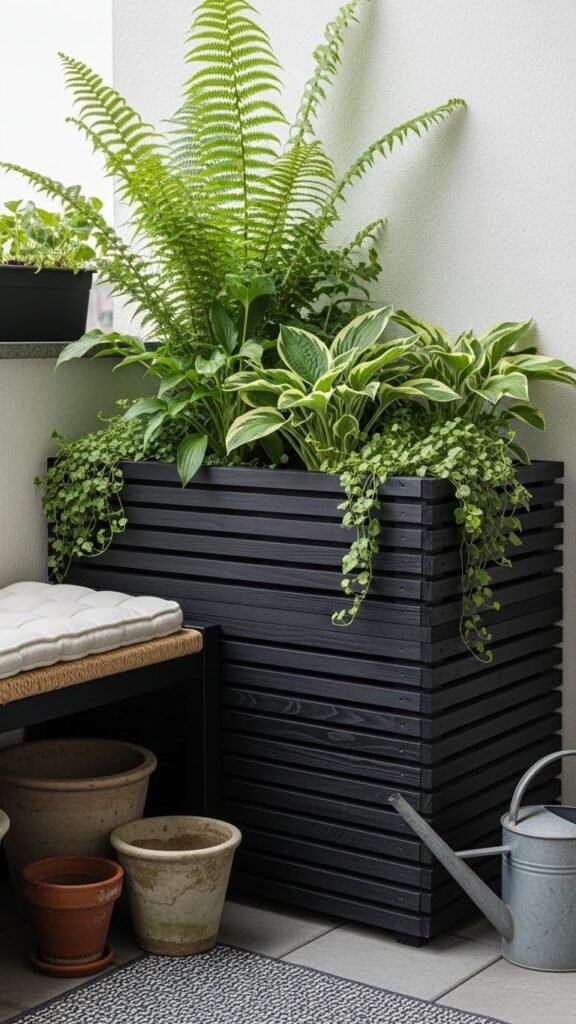
These bring a moody, modern feel to garden spaces. Deep-stained wood laid in clean horizontal slats feels chic and relaxed, like something designed by a plant lover who doesn’t fuss over perfection.
They accommodate shade-loving greenery beautifully: tall feathery ferns for drama, soft hostas for a sculptural touch, and groundcover spilling over the edge. The height gives instant privacy while still keeping things lush. Add weathered watering cans or clay pots for charm; a woven seat cushion or narrow bench can invite you to stay awhile. String soft globe lights or tuck in lanterns for evening atmosphere. A trailing vine or variegated leaf plant adds dimension — and letting things lean a bit wild is the point.
9) Natural Cedar
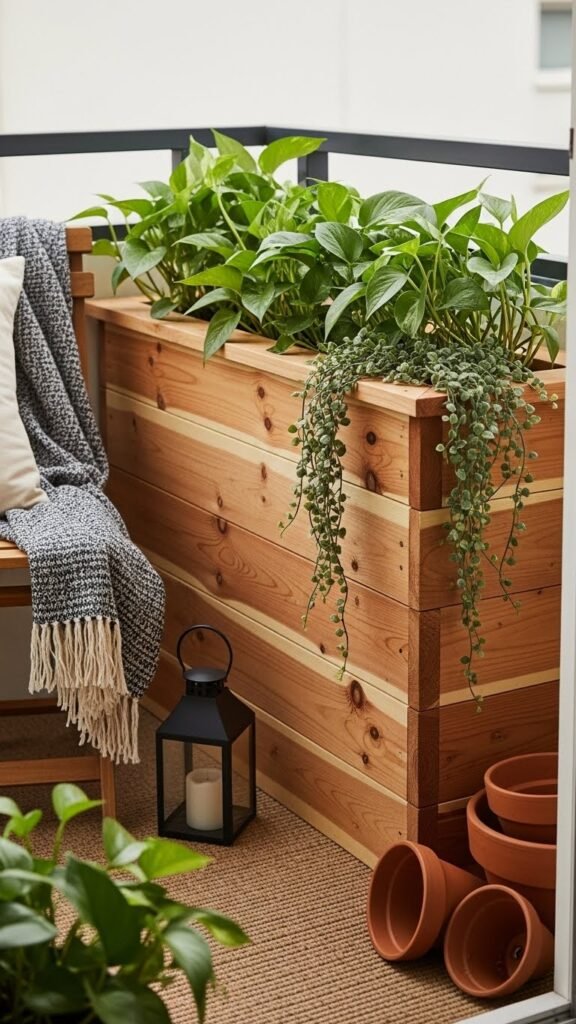
These planters feel like a quick, cozy upgrade rather than a big renovation. Warm, knotty cedar helps soften hard elements like metal railings, giving a balcony instant “homey” energy.
Packed with trailing pothos and low groundcover that spills over the edge, they strike a balance between intentional design and relaxed informality. Keep styling simple — a few terracotta pots at the floor, a woven throw over a chair, a small lantern for evening light. Add seasonal pops of color with flowering plants or herbs, and finish with wooden herb markers for a functional, lived-in touch. The result is a balcony that feels comfortable and loved without trying too hard.
10) Taupe Timber
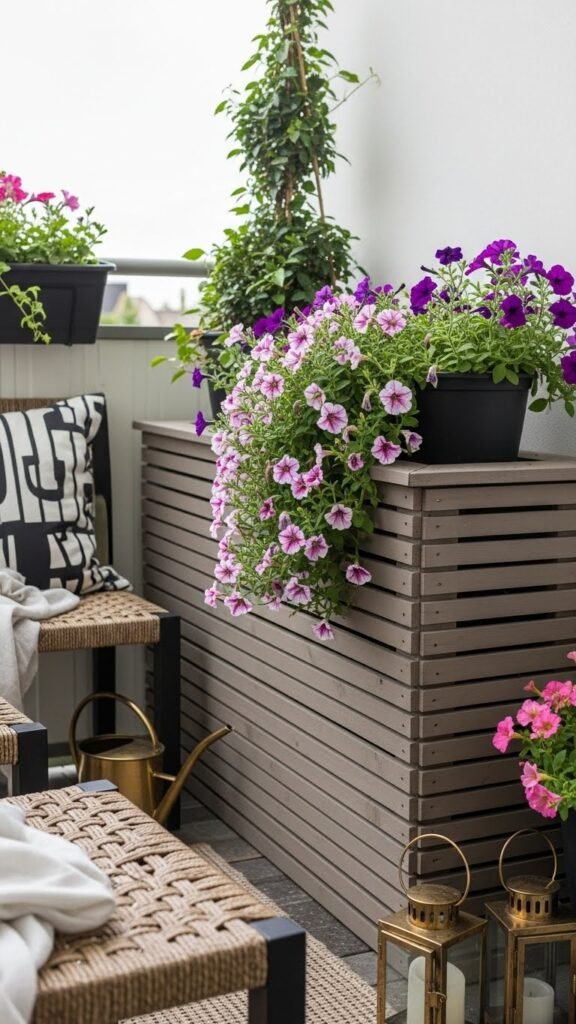
These timber boxes have a chic, slightly weathered appearance. Soft grey staining and horizontal slats give a polished but relaxed look, while bright petunias tumbling over the edge add instant vibrant energy.
Trail a vine like ivy along a corner and soften edges, or mix in a clipped evergreen behind for height. Pair with woven seating, a terracotta or brass watering can for contrast, and lanterns for evening ambiance. Keep the palette minimal — grey wood, dark pots, bright blooms and varied leaf textures, letting the colors of the plants take center stage.
11) Warm Honey Wood
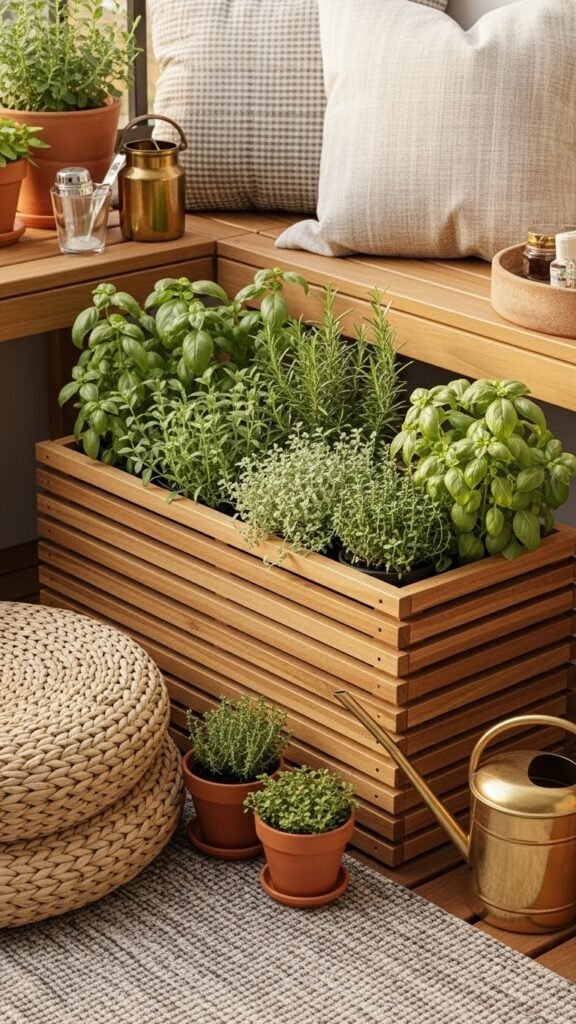
With slatted wood that complements nearby benches or decking, these planters feel like built-in furniture. They’re ideal for kitchen herbs — basil, rosemary, soft feathery herbs — making it easy to snip fresh greens without ever leaving your seat.
Their shallow depth works well for dense yet low-maintenance plantings that still feel lush. Style with woven cushions, an outdoor rug, terracotta pots with succulents or small plants, and a brass watering can for charm. Add a few lanterns and trailing plants softening the edges, and you’ve got a cozy garden corner — perfect for relaxing with a cool drink.
12) Weathered Grey Reclaimed Wood
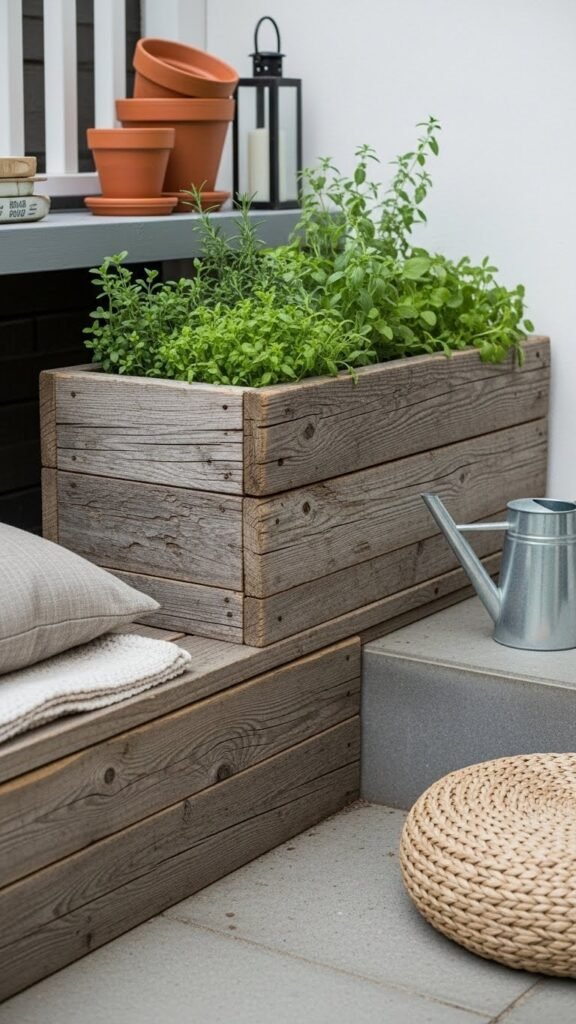
These feel cozy and collected thanks to their rough textures and warm brown tones. They tuck neatly under benches or along steps, transforming narrow or overlooked spaces into little green spots.
Plant with an easy mix of herbs and leafy fillers — forgiving if you miss a watering now and then. Style simply: terracotta pots, a rumpled woven cushion, a slim watering can left casually nearby, and lanterns for evening glow. Group several boxes to create rhythm and charm, building curb appeal without effort.
13) Sunlit Honey-Brown Timber
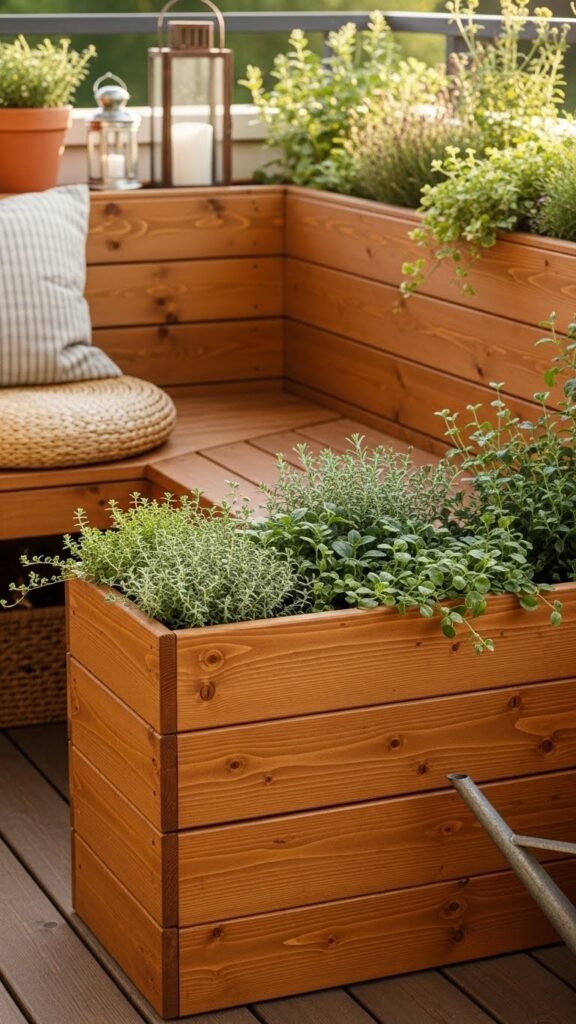
These planters radiate rustic charm. The sun-warmed wood grain and cozy corner bench make for a small, inviting hangout spot — like a secret garden nook on a balcony or porch.
Inside: a mix of low, herbaceous greens or soft foliage, maybe some compact perennials or trailing plants to soften edges. Because the bed is shallow, it’s ideal for herbs or plants that don’t need deep roots. Keep styling simple — a woven cushion on the bench, a terracotta pot or metal watering can nearby, and perhaps a few lanterns or string lights for late-evening vibes. A single bold pot plant at one end balances the line of greenery. Neutral tones, soft textures — let the plants steal the show.
14) Sunlit Weathered Timber Herb Box
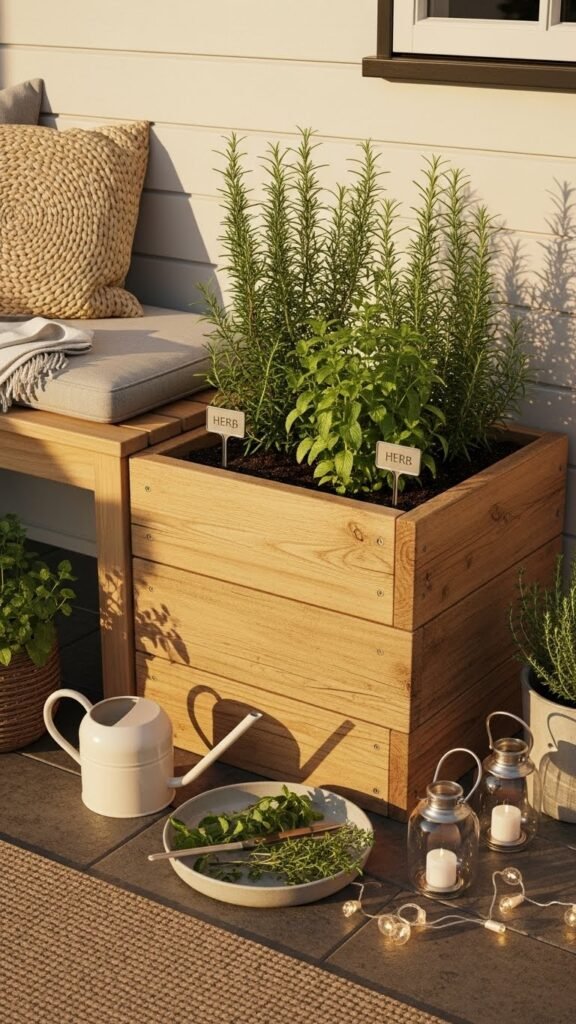
This style feels like it belongs to the house — not an afterthought, but part of the home’s rhythm. The sun-warmed, weathered wood gives off cozy charm. A corner bench built into the design doubles as seating.
It’s filled with upright rosemary, soft mints, and kitchen herbs spilling slightly over the edge — perfect for grabbing fresh herbs on mealtime whim. Style simply: a few terracotta pots with trailing herbs, a woven cushion, and a small ceramic watering can nearby. Add metal herb labels, a shallow basket for clipping harvests, and string lights or lanterns — and suddenly it’s a spot you actually want to hang out in after sunset.
15) Weathered Grey Timber Planters
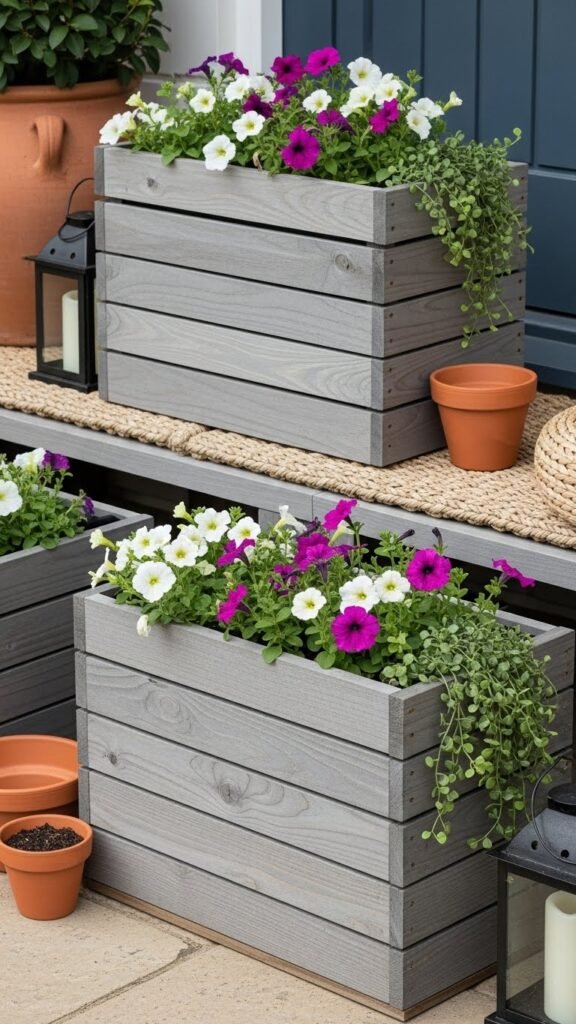
These boxes combine a relaxed, slightly refined vibe. Clean rectangular lines give structure, while cheerful petunias spill over, adding life and movement — all without much effort.
Plant with a mix of seasonal blooms and trailing greenery for energy and softness. Pair with terracotta pots and a woven seat pad for texture. Flank a door with two matching boxes for quick curb appeal. Finish with lanterns or string lights for nighttime mood. If you want more height, add a slim trellis or small bench — but often, the boxes themselves do all the work.
16) Rustic Timber Planters
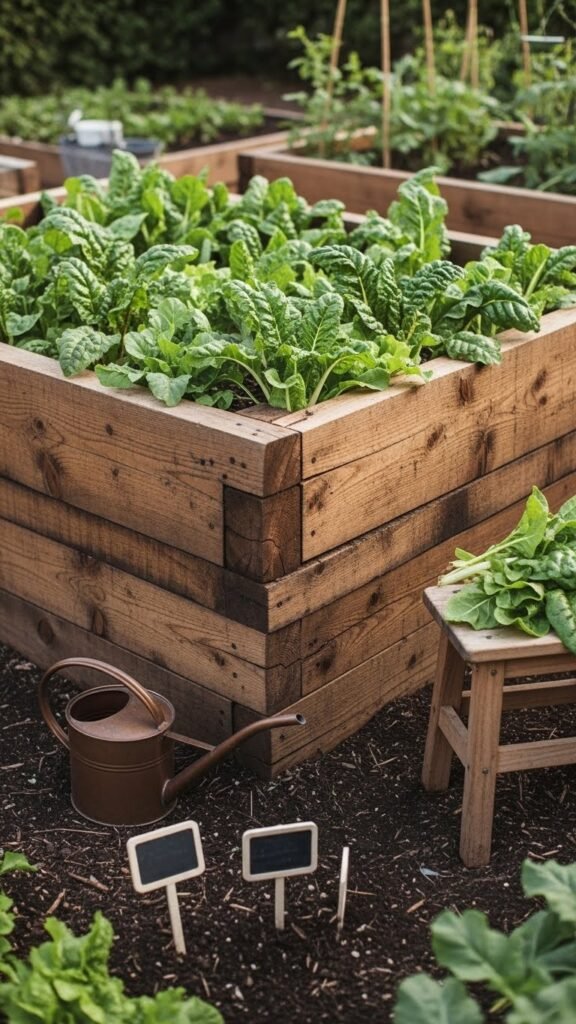
With deep, roomy beds, these are ideal for leafy greens, hearty vegetables — think big, healthy lettuces or chard. The wood grain and simple joinery feel honest and durable, and the dark soil beneath makes it look purpose-built, like a proper kitchen garden rather than a decorative afterthought.
Keep styling simple: use a copper watering can, chalkboard plant labels for personality, a small stool for harvesting, and terracotta pots of thyme or basil for extra scent and greenery. Add a woven outdoor rug and string lights, and you’ve got cozy usability — a garden setup that feels real, relaxed, and alive.
17) Weathered Honey
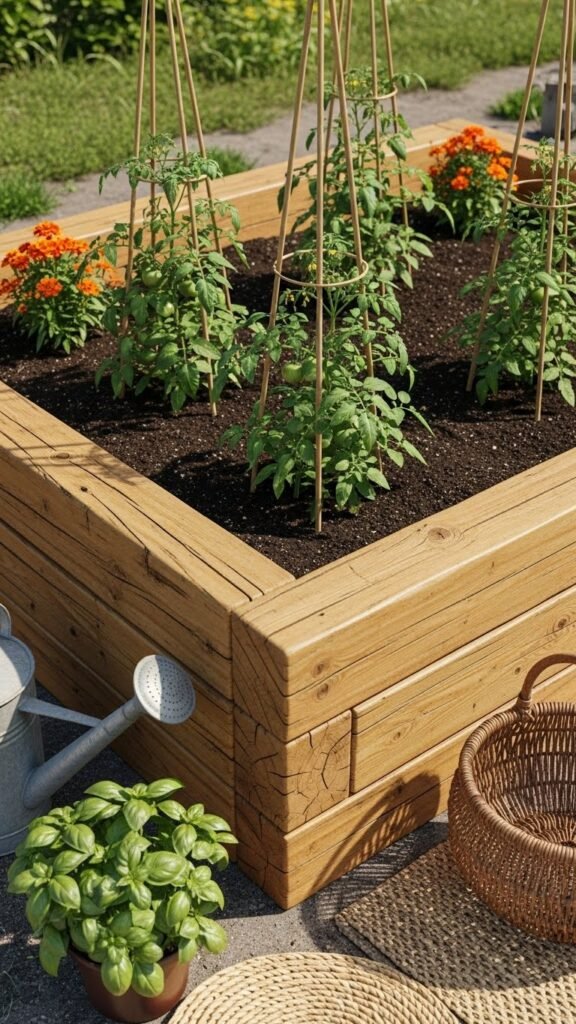
Chunky timber planks give this raised bed a handcrafted, sturdy vibe — and make soil and ripening tomatoes stand out beautifully. The slightly weathered wood reads like a well-loved garden companion.
Plant tomatoes with simple bamboo stakes for support. Tuck in companion plants like basil or marigolds in the corners for color and pest control. Leave a rustic watering can and a harvest basket nearby for a lived-in feel. Add terracotta pots or a woven mat at the base, string solar lights, or add a wooden stool — it becomes a warm, functional, cozy garden spot.
18) Weathered & Aged Timber Trough
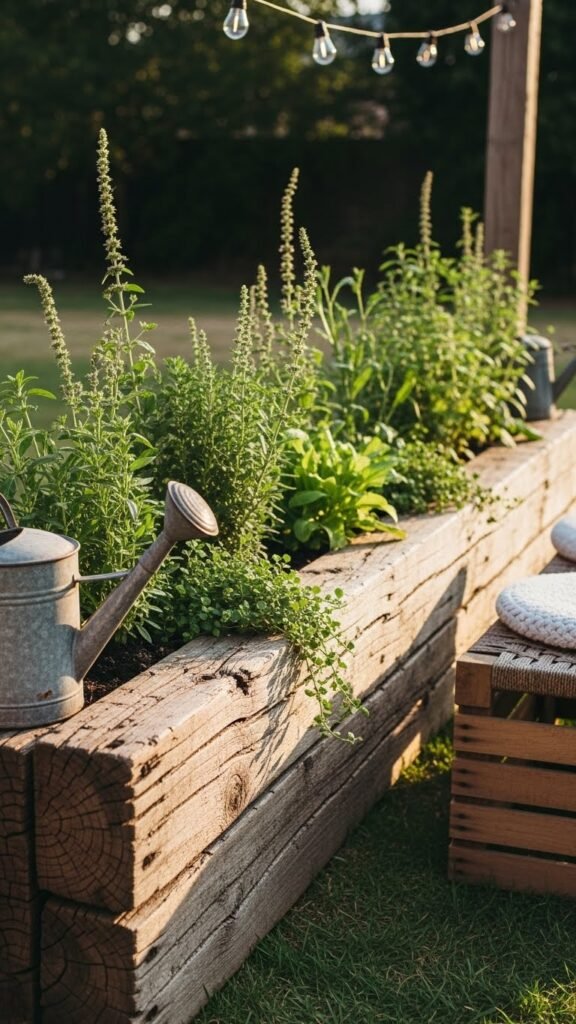
These have a lovely old-world charm — reclaimed thick boards with character and honesty, like a vintage jacket that’s only gotten better with age.
Fill with a mix of upright herbs, leafy greens, and a few trailing plants for softness. Keep metal fastenings minimal and let the soil show you mean business. Style simply: terracotta pots or a chipped watering can at the ends, a low bench or woven crate for seating, and soft string lights for the evening. Toss in a bold architectural plant spilling over one side — that’s enough flair.
19) Mahogany Slatted Box
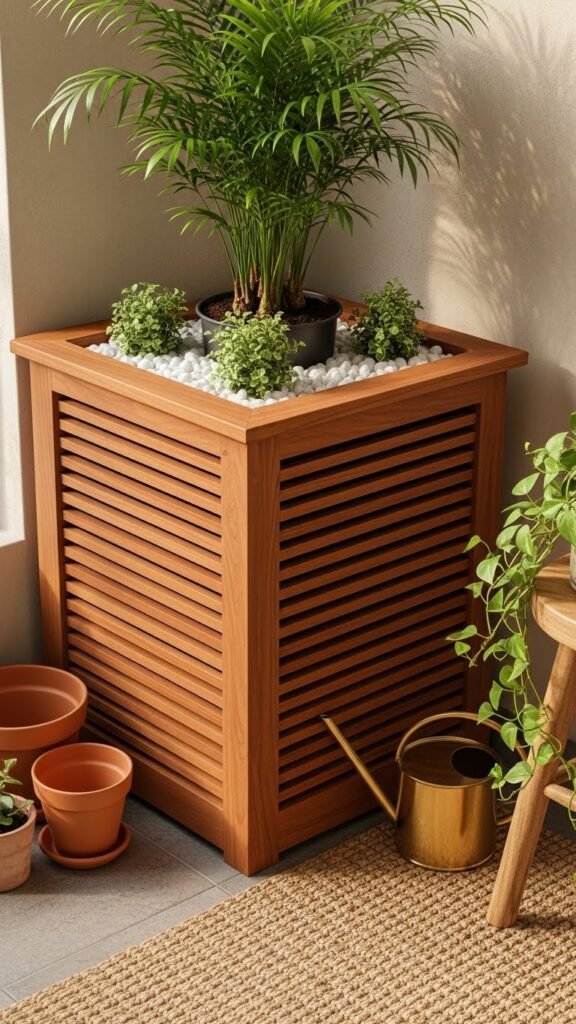
A piece of balcony “furniture” more than just a planter. Warm slatted wood and a rectangular shape give the plants a kind of stage. Inside: tall palms, a compact cycad, and low leafy fillers; bright white pebbles on top make the greens pop.
Style with a woven rug, a couple of terracotta pots, and a brass watering can for a relaxed but sophisticated vibe. Let a trailing vine spill over one corner, tuck a small herb trio at the end for scent, and sprinkle some string lights or add a lantern for a cozy evening glow. Toss in a simple wooden stool for seating — it pulls the whole look together, even if you didn’t try very hard.
20) Rustic Chippy Blue
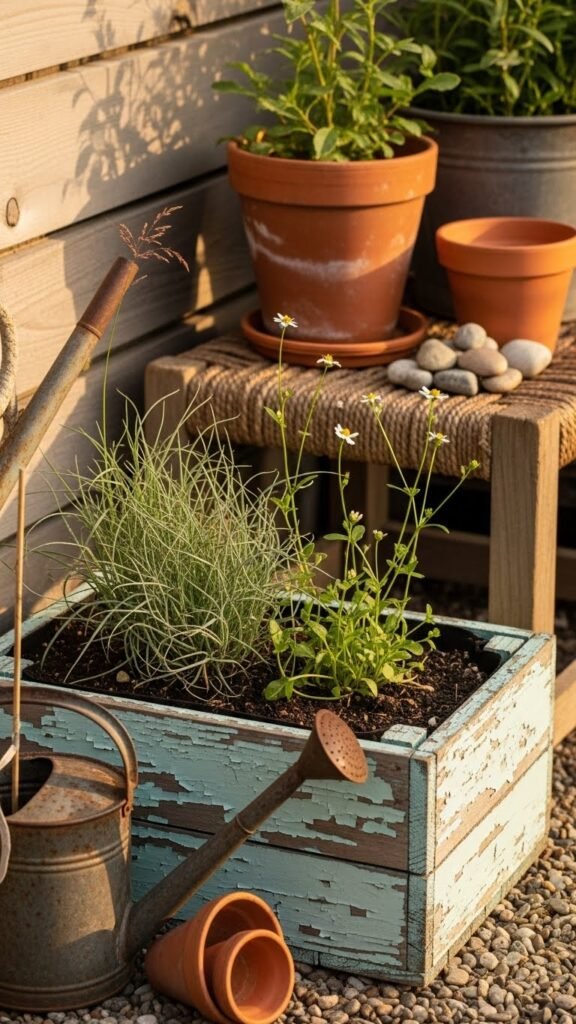
These bring a bit of personality with sun-bleached, chippy painted wood — like a thrifted treasure with garden potential. Rough texture and faded blue color add instant character.
Inside: wiry grasses, tiny white flowers, maybe a few self-seeded bits for a carefree, natural aesthetic. Style with warm, worn touches — a rusty watering can, terracotta pots, a woven throw nearby for seating. Soft string lights or lanterns add evening charm. For contrast, plant herbs like lavender or rosemary, or trailing ivy to soften edges. A chalk tag for herbs and some pebbles on the soil top it off — simple, charming, slightly wild.
21) Slatted with Lush Greenery
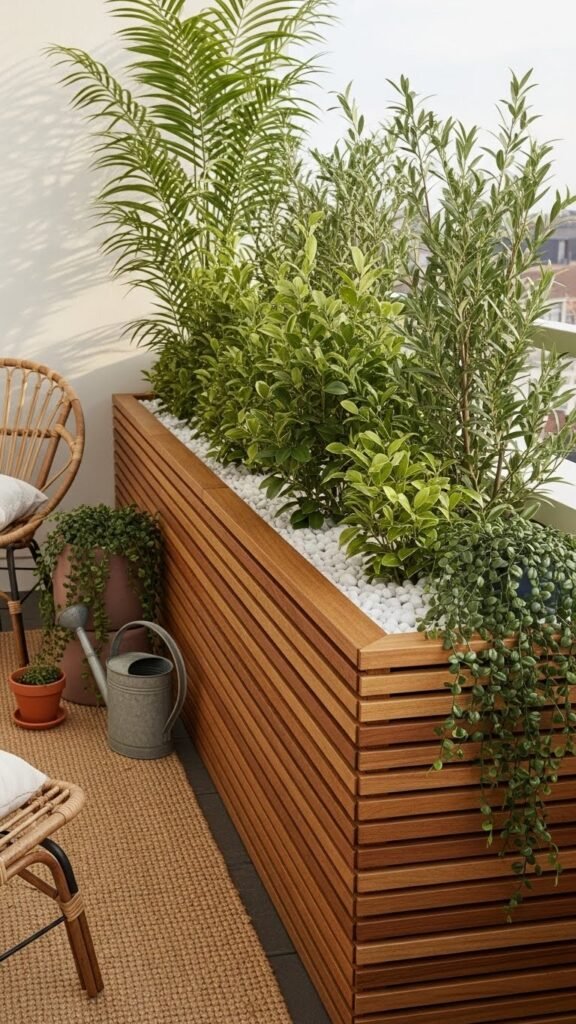
These planters use warm, slatted wood that feels polished and relaxed. Their long, narrow shape is perfect for balconies or terraces — giving you green privacy without crowding your space.
Fill with a blend of taller palms and glossy shrubs for height and movement, top with crisp white pebbles for a tidy finish. Style with a woven outdoor rug, a pair of rattan chairs, and a few terracotta pots with trailing plants at the ends. Lanterns or string lights deliver soft evening ambiance; toss in a weathered watering can for personality. It’s a planter that instantly transforms a balcony into a little outdoor room — relaxed, inviting, and intentional.
22) Honeyed Timber Planter Box
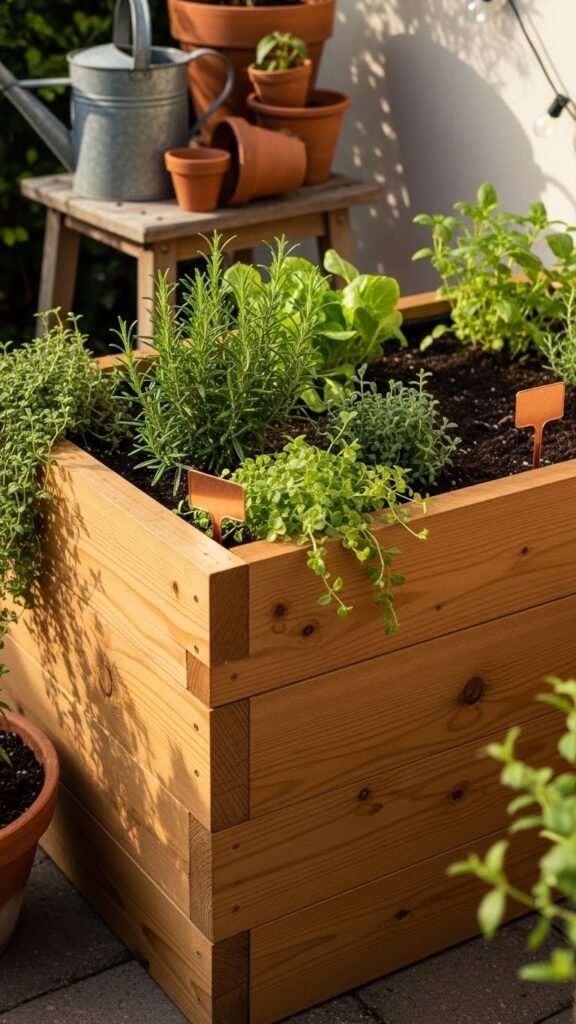
Classic timber planter — warm, weathered and honest. Deep beds mean real growing potential. Inside, I love mixing rosemary and leafy greens that soak up sunlight and smell like summer.
Use simple bamboo stakes and twine for vertical support. Let dark, rich soil show off that someone’s actually cared for this garden. Style with a battered metal watering can, overflowing terracotta pots, a small wooden stool — maybe some copper plant labels for polish. Add softly glowing string lights, tuck trailing herbs somewhere loose, scatter a few pebbles — relaxed gardening elegance.
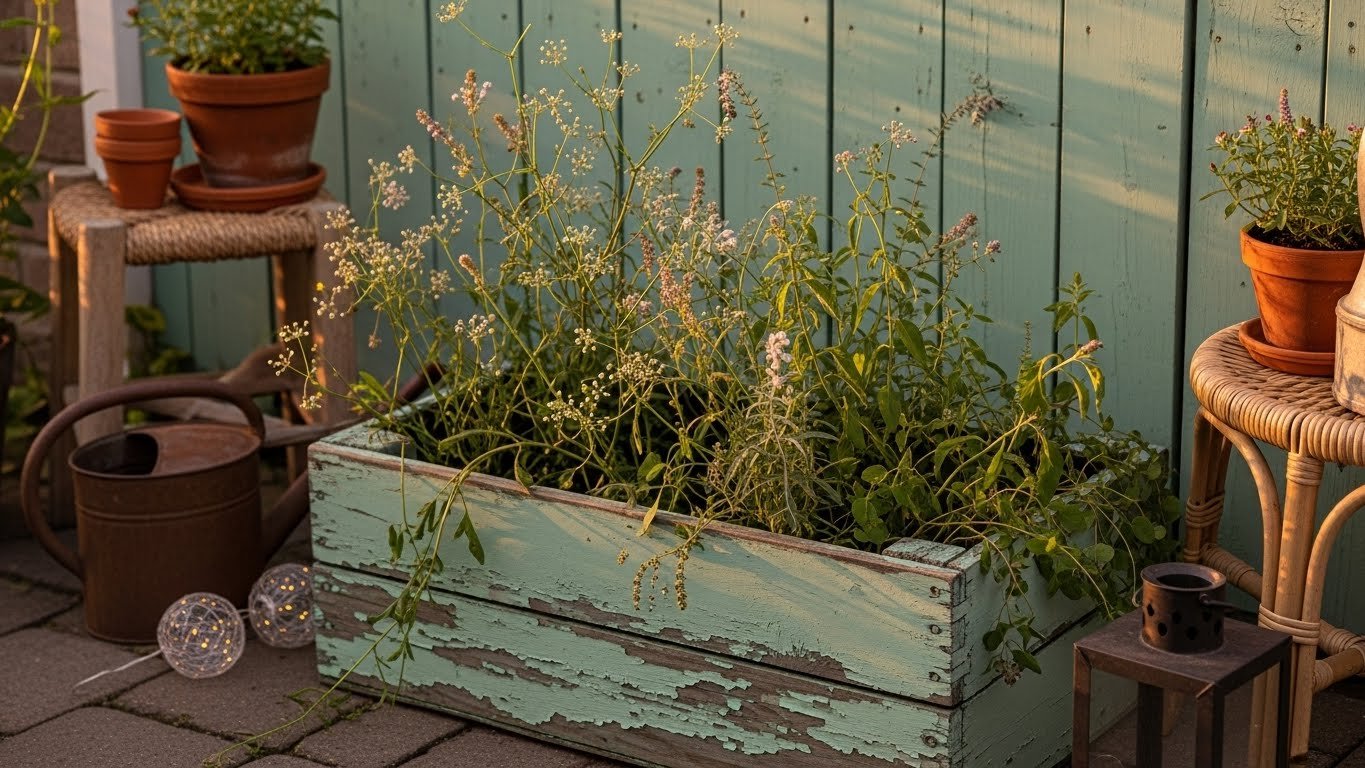
23) Peeling Mint
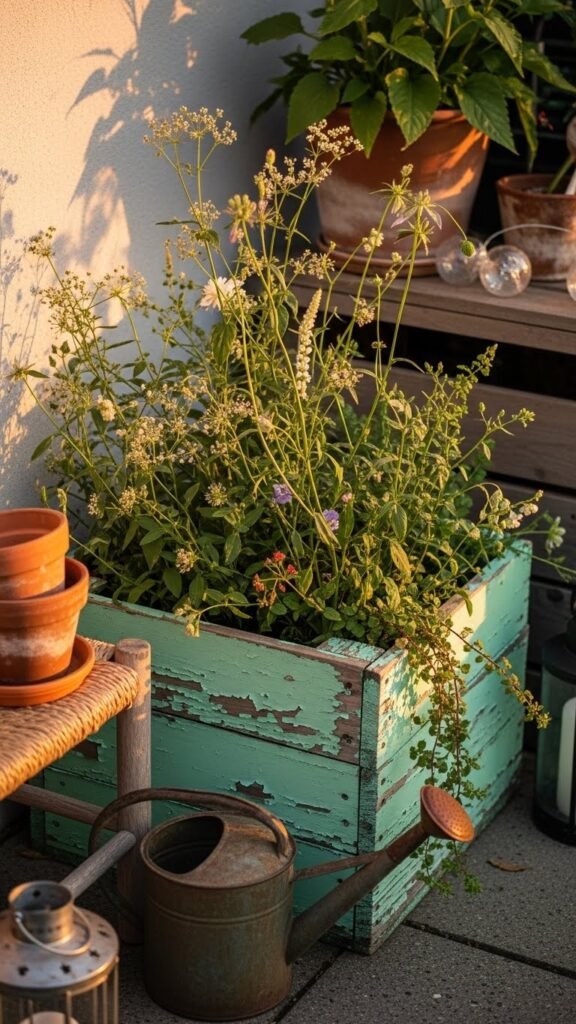
This is the garden version of a well-loved vintage find: rough wood, peeling mint paint, and shallow but roomy beds. Inside, airy stems and little seed heads emerge among trailing greenery — a “messy, happy” plant mix rather than something too controlled.
There’s enough depth for hardy perennials, a few volunteer annuals, maybe some herbs or bold foliage plants. Style it simply: a rusted watering can, mismatched terracotta pots, a woven stool for sitting nearby. Add soft string lights or a lantern for evening mood. Keep the palette warm wood, weathered textures, natural greens and minty paint tones. Let things lean imperfect — that scruffy edge brings charm.
Tips and Tricks for Timber Planter Boxes
Here are some of my go-to guidelines for getting the most out of timber planter boxes:
- Choose rot-resistant timber: I like cedar or larch because they resist rot and often smell nice. Avoid pressure-treated wood if you’re growing anything edible.
- Match planter depth to what you’re planting: Plan for 12–18 inches for herbs and annuals, 18–24 inches for most vegetables, and go deeper if you want root vegetables or small shrubs.
- Ensure good drainage: Drill several half-inch holes in the bottom, line with landscape fabric, add gravel or broken pots for drainage, then fill with a free-draining potting mix.
- Use a smart liner: Staple in a heavy-duty pond liner or food-safe plastic inside the box. Fold seams away from soil and leave a small air gap so the wood has a chance to dry out between waterings.
- Finish only the exterior: Treat or paint the outside to protect against UV and rain, but keep the interior raw (or simply lined) so you avoid contaminating soil if you’re growing edibles.
- Plan your plant layout: Use a tall focal plant at the back, medium-height fillers in the center, and trailing plants at the front so each planter feels like a mini garden rather than a random pot.
- Make moving easier: If you want flexibility, add lockable wheels (casters) or place pots on pavers — makes it easy to reposition for sunlight or winter shelter without heavy lifting.
- Refresh and maintain yearly: Top-dress with compost each spring, replace old soil every couple of years, and sand or tighten joints if wood starts to crack over time.