30 Garden Walkway Ideas Using Stones to Transform Your Outdoor Space
Designing a garden walkway with stones is a simple yet powerful way to give your outdoor area personality, structure, and charm. Whether you’re trying to direct foot traffic or simply elevate your garden’s look, stone paths offer a natural, durable, and inviting solution. There are plenty of styles and materials to choose from — whether you’re on a tight budget or going for a high-end finish. Stone walkways strike a beautiful balance between practicality and aesthetics, making any yard more welcoming and easier to navigate.
Here’s a list of stone-walkway ideas you can draw inspiration from:
1. Stepping stone pathway on a gravel base
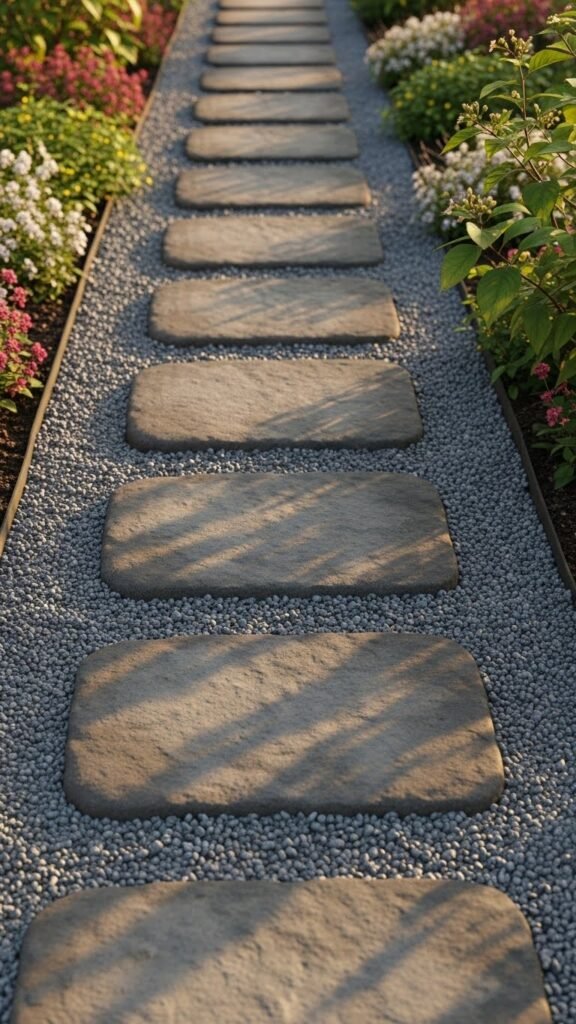
A classic, down-to-earth option: lay stepping stones on a bed of gravel. The gravel helps with drainage and keeps the stones stable. It’s an affordable, beginner-friendly design — ideal for a small garden path. Bordering the walkway with plants or flowers adds a warm, inviting feel.
2. Curved stone path with grass inlays
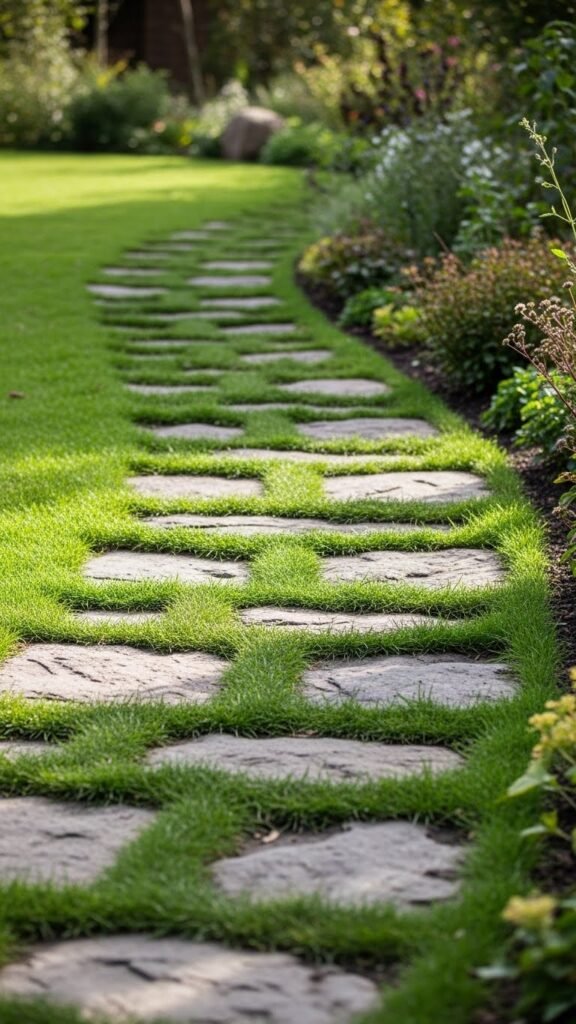
For a soft, natural vibe, try a gently winding stone path with grass growing between the stones. The curves lead the eye (and feet) naturally through the garden, and the green grass adds a fresh, organic touch. This style tends to blend beautifully into a wide range of garden themes.
3. Flagstone walkway using irregular shapes
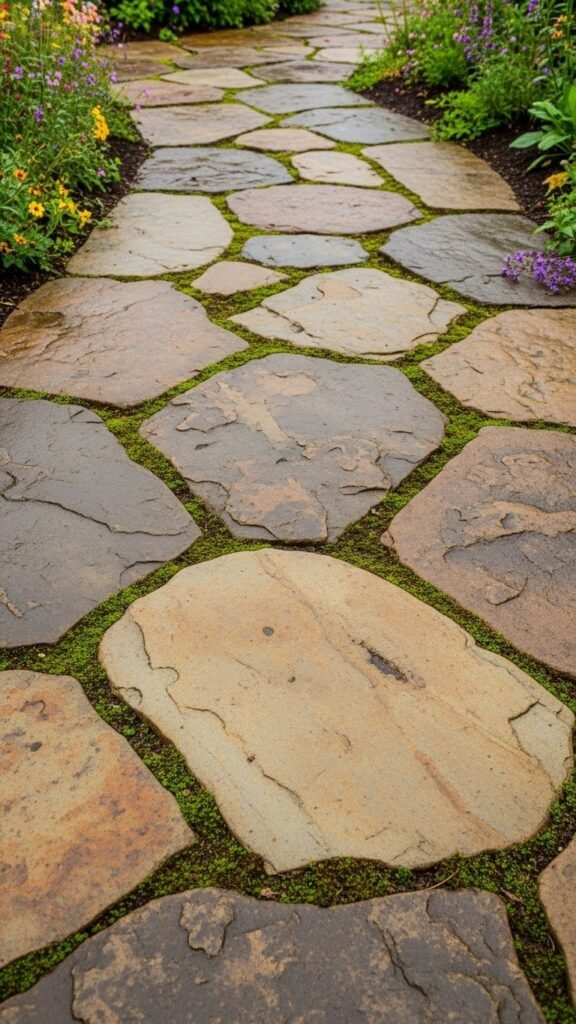
Using flagstones in irregular shapes creates a relaxed, natural look. The stones don’t need to fit perfectly together — which actually enhances the charm. Mixing different sizes and shapes adds visual interest. You can even fill the gaps with moss or ground-cover plants for a softer, garden-integrated feel.
4. Concrete paver stone path
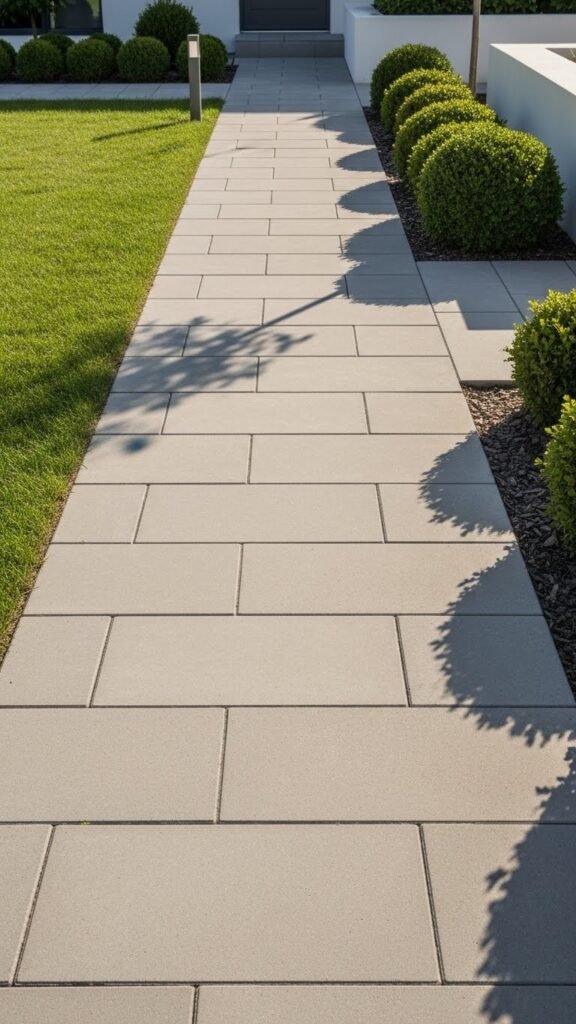
For a clean, polished look, concrete paver stones are a solid choice. They come in many shapes and sizes, letting you design a walkway that complements your garden style. Pavers are easy to install and maintain, and you can even choose stamped versions that mimic natural stone or wood — a cost-effective way to get a refined finish.
5. Pebble and stone mosaic pathway
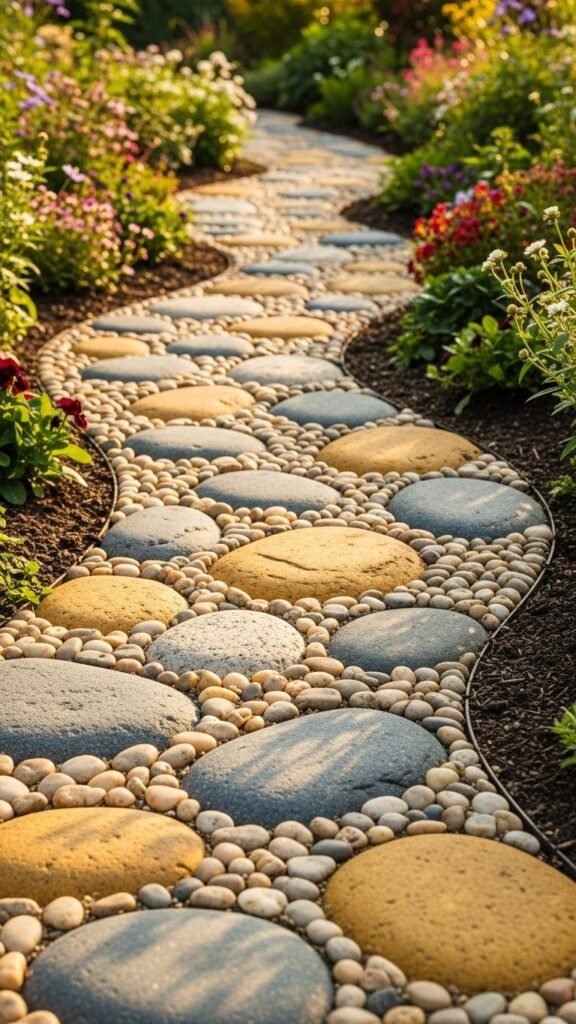
If you want your path to stand out, consider laying pebbles and stones in a mosaic pattern. This brings both color and texture to your garden. Mosaic paths are durable, and depending on the design, you can go for something simple or elaborate — even incorporate shapes or lettering into the layout.
6. Large flat stone slabs spaced with moss
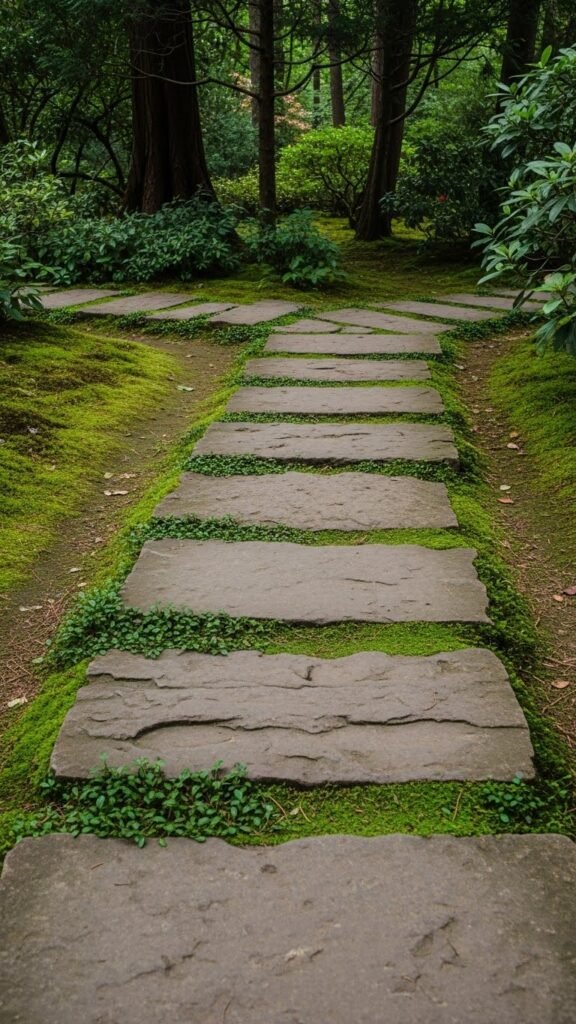
A minimal yet serene option: large, flat stones spaced apart so moss — or other ground-cover plants — can grow between them. This style suits shady or calm garden corners, where moss thrives. It offers a low-maintenance, peaceful pathway that blends seamlessly with greenery.
7. Gravel-stair stepped stone walkway (for slopes)
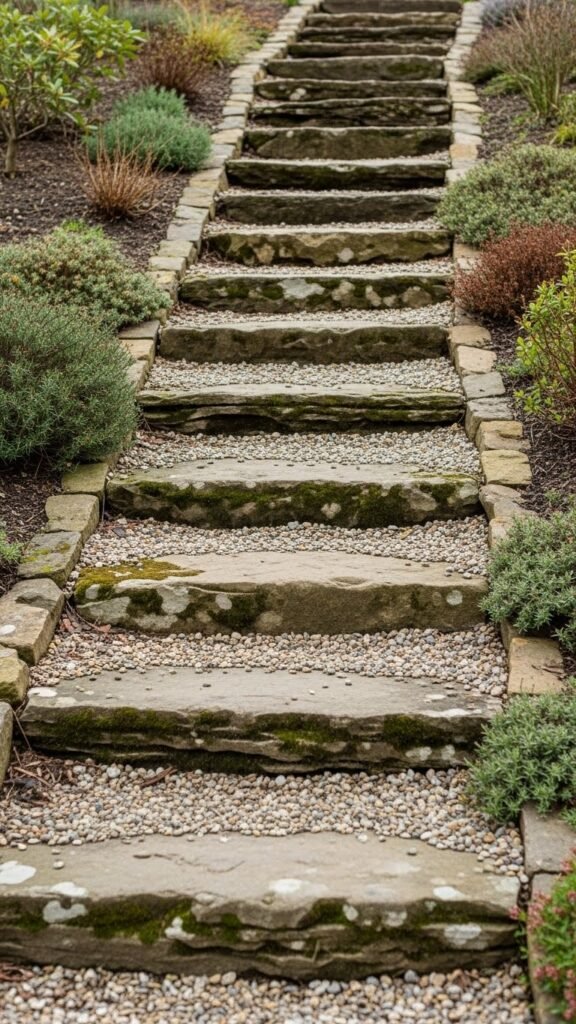
If your garden terrain is uneven or sloped, consider a stone path that doubles as stairs: flat stones set as steps, with gravel or smaller stones filling the gaps. This design improves drainage, reduces muddiness after rain, and adds a relaxed, natural feel. Great for gardens that need both function and form.
8. Mixed border path: brick and stone
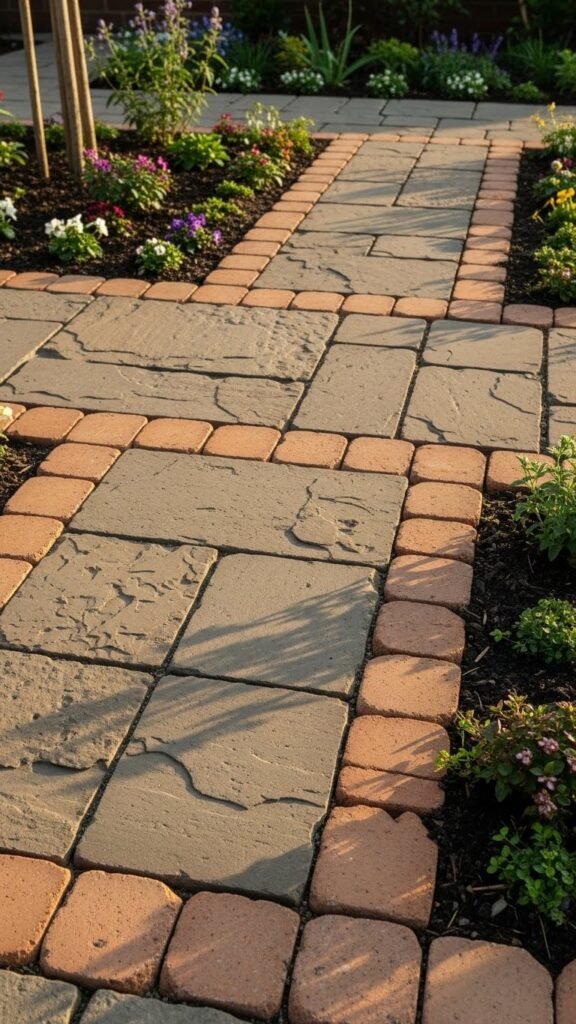
Combine bricks and stones to give your walkway structure and charm. Use stones for a natural feel and bricks for a tidy, defined border. The result is a versatile and balanced design that works in many garden types — and easy to customize with different colors or stone/brick choices.
9. Circular stepping-stone zones
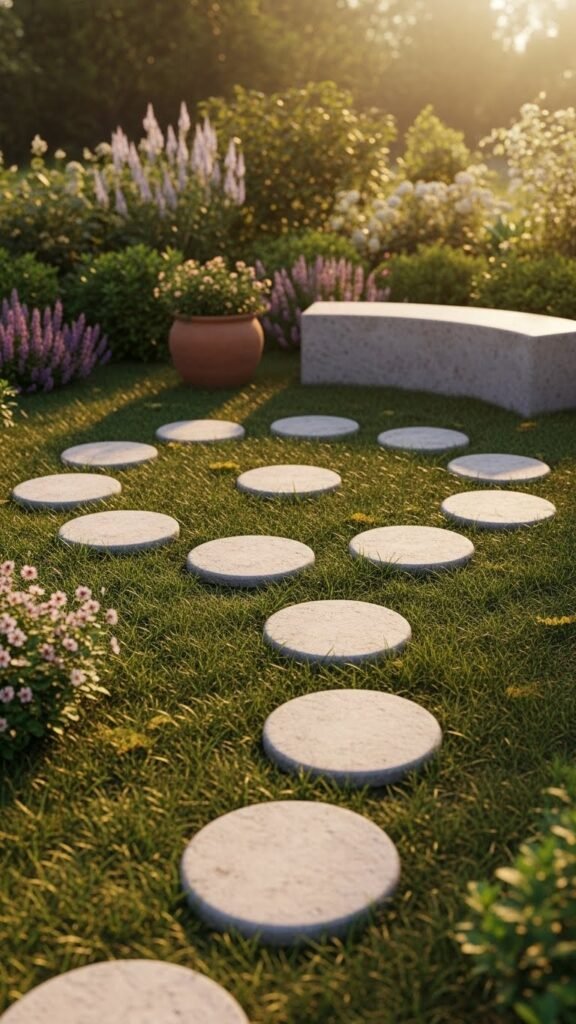
If you want something different from straight or curved paths, consider circular stepping-stone zones. These use round or curved stones arranged in patterns to create cozy pockets in your garden — perfect for small sitting areas or resting spots. This design softens harsh lines and adds a playful rhythm to the garden layout.
10. Sunken stone pathway with mulch sides
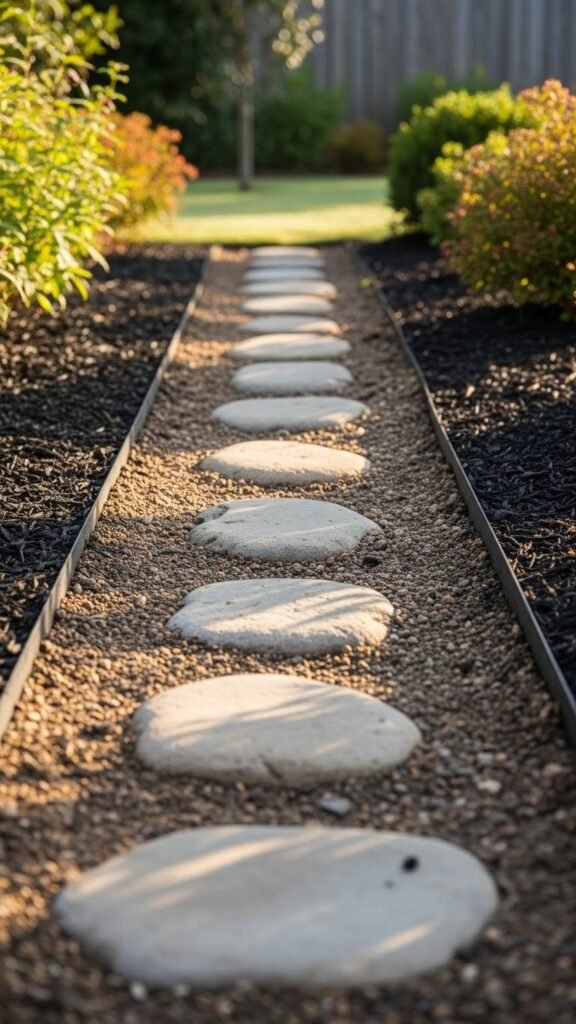
For a subtle, natural effect, set stones slightly below ground level to create a “sunken” path. Add mulch or soft material on either side of the walkway to contrast the stones. It’s a straightforward, low-cost design that blends elegantly with surrounding plants and often requires minimal maintenance.
11. Natural river-stone path
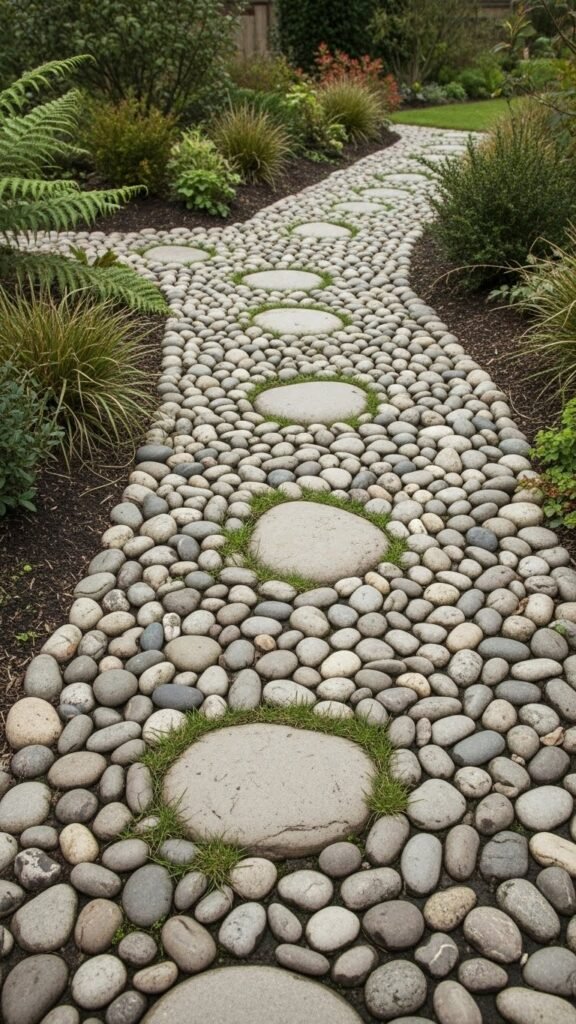
Smooth, rounded river stones of varying sizes can make a pathway that feels organic and rustic. Leave small gaps so grass or moss can sprout between them — giving the path a “part of nature” vibe. This style is especially fitting in gardens with a wild, natural flourish.
12. Stone edging garden walkway
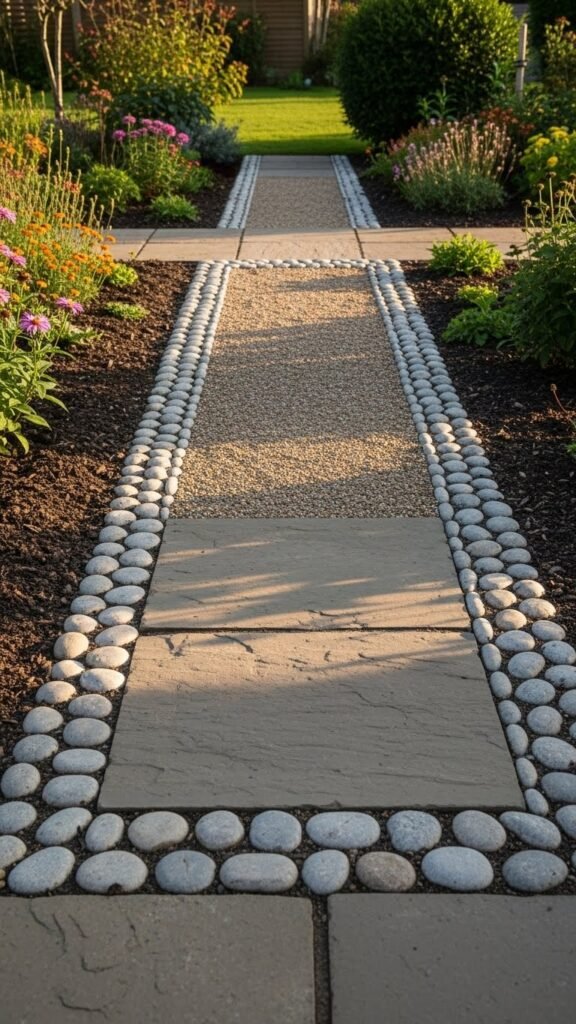
You can define a garden path with stone edging for a clean, finished look. Edging helps outline the path clearly and gives a sense of boundary and order. Because stone integrates so well with natural surroundings, this is a subtle but effective option to enhance walkway aesthetics.
13. Mixed-size stones for texture and contrast
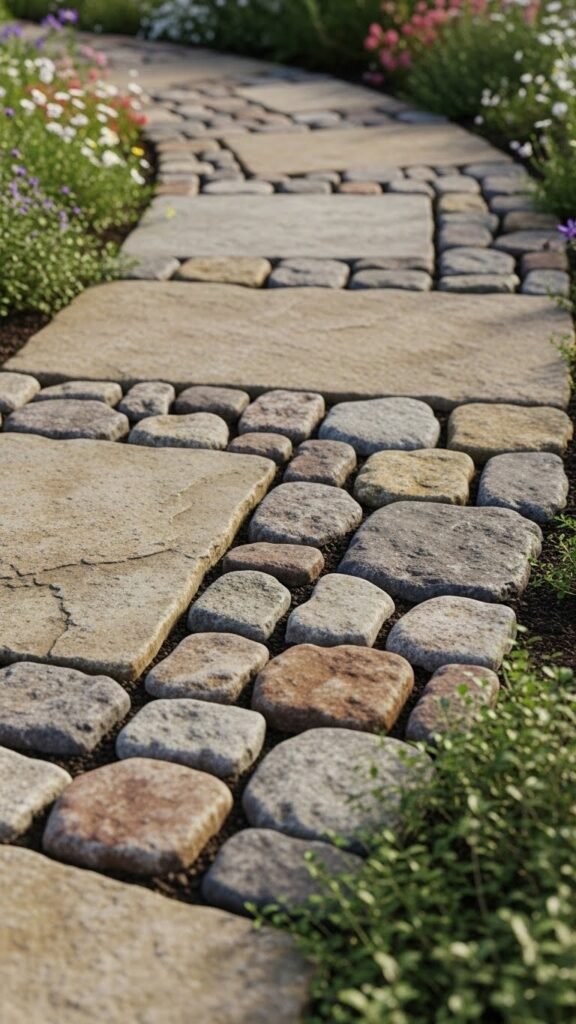
Mixing stones of different sizes — combining large flat stones with smaller, rougher ones — adds depth and texture to your walkway. This approach builds visual interest without complicated design work, and it brings a creative, organic feel to your garden path.
14. Crushed stone and large slab combination
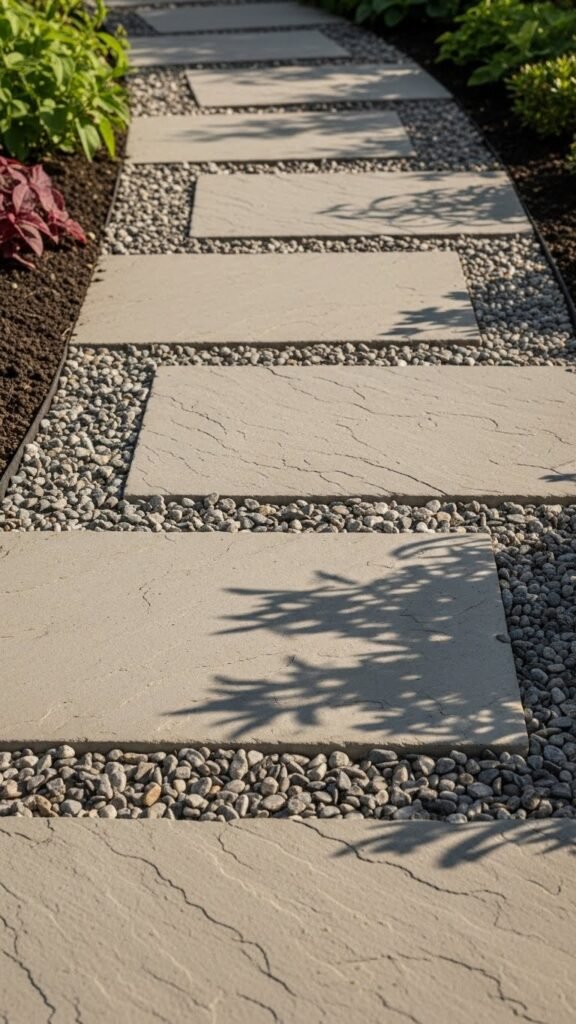
Blend large stone slabs with crushed stone filling the gaps. The large slabs offer stable walking surfaces, while the crushed stone helps with drainage and adds texture. Depending on your stone color choices, you can tailor this style to suit either a rustic or more modern garden.
15. Flat slate pathway for a clean, modern look
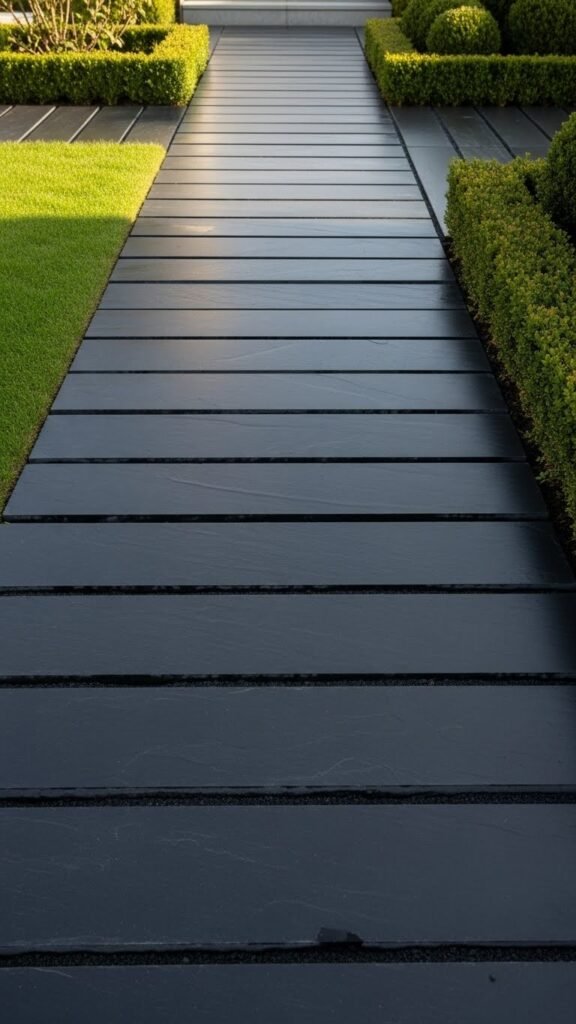
Flat slate stones create a sleek, refined walkway — especially when laid in straight, even rows. This design suits modern or minimalist gardens and offers a smooth surface for walking. Slate paths give a tidy, structured look and are ideal if you prefer clean lines and an orderly feel.
16. Rustic fieldstone stepping path
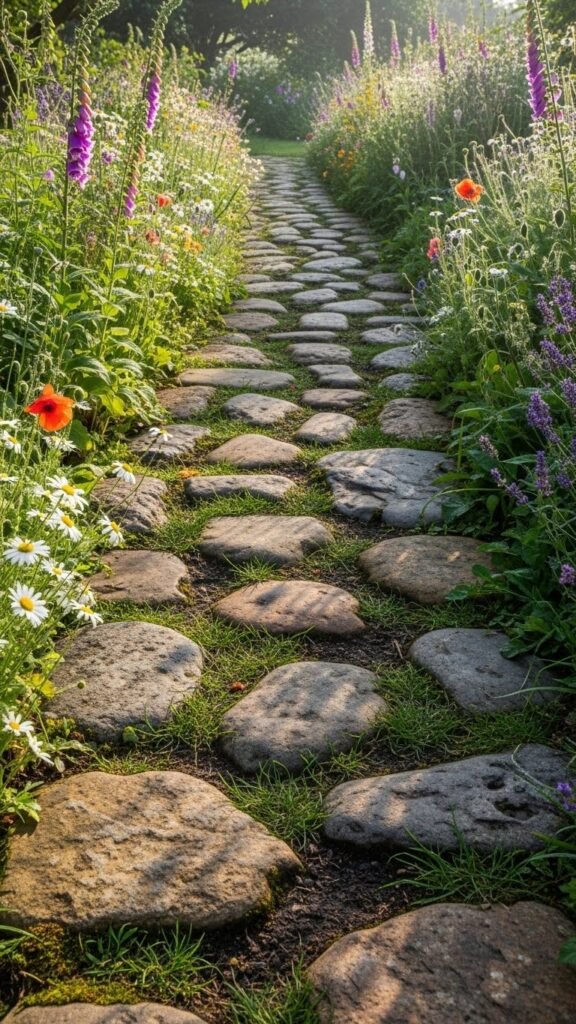
Fieldstones — with their rough, uneven edges and earthy tones — are perfect for a rustic, natural garden vibe. When laid unevenly, they give a charming, cottage-style feel. This path type works beautifully in cozy backyards or gardens with a more informal, natural design.
17. Stone path meandering through flowerbeds
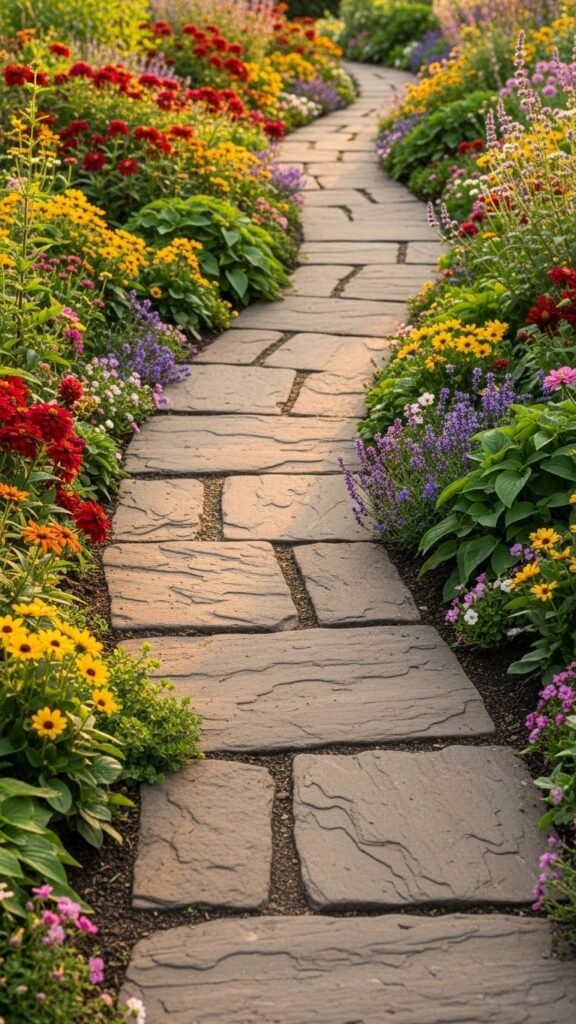
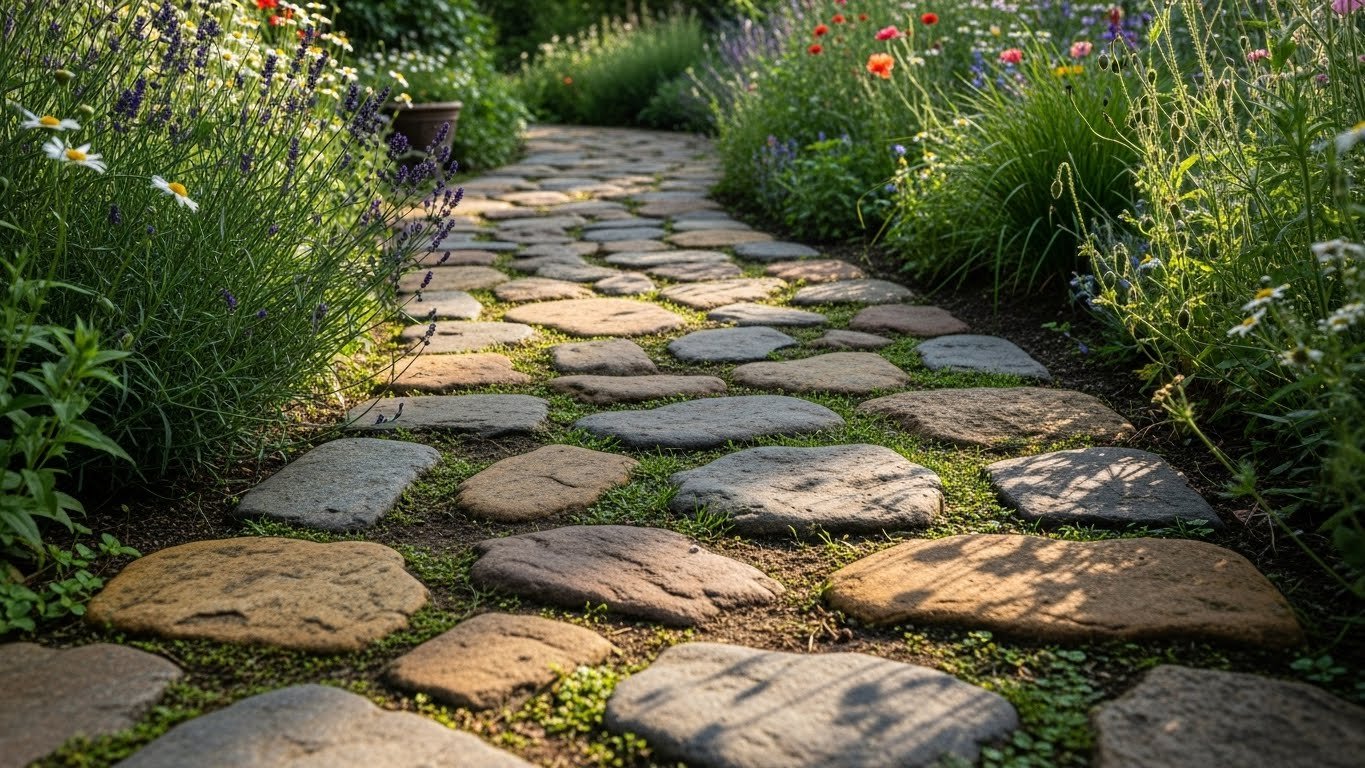
Let your pathway wind gently between flowerbeds for a garden path that encourages exploration and offers close-up access to your plants. With natural stones and greenery surrounding the path, you get an organic, welcoming flow that blends path and garden into one.
18. Stone steps accented with wood
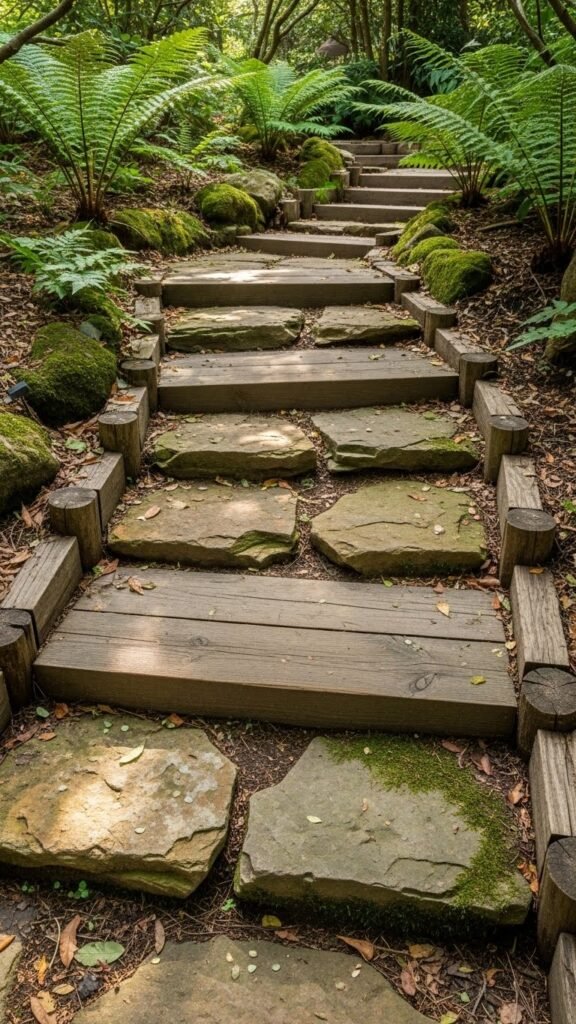
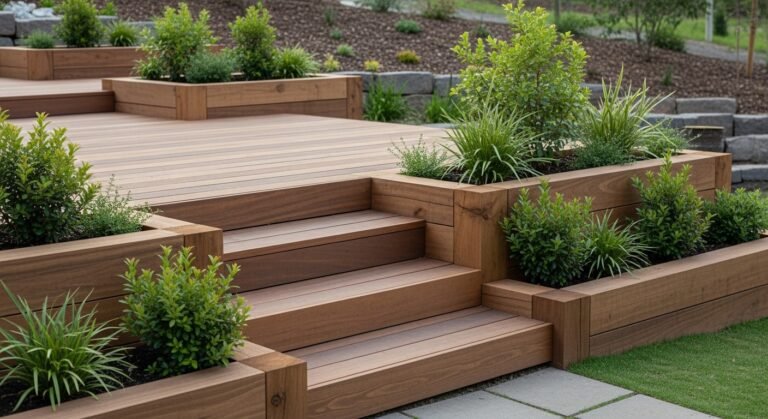
Combining stone steps with wooden elements — such as planks or logs placed between or alongside the stones — gives a natural, warm, textured look. This mix of materials can make your walkway feel cozy and inviting, especially in gardens where you’d like a more rustic, handcrafted aesthetic.
19. Flagstone path softened with ground cover plants
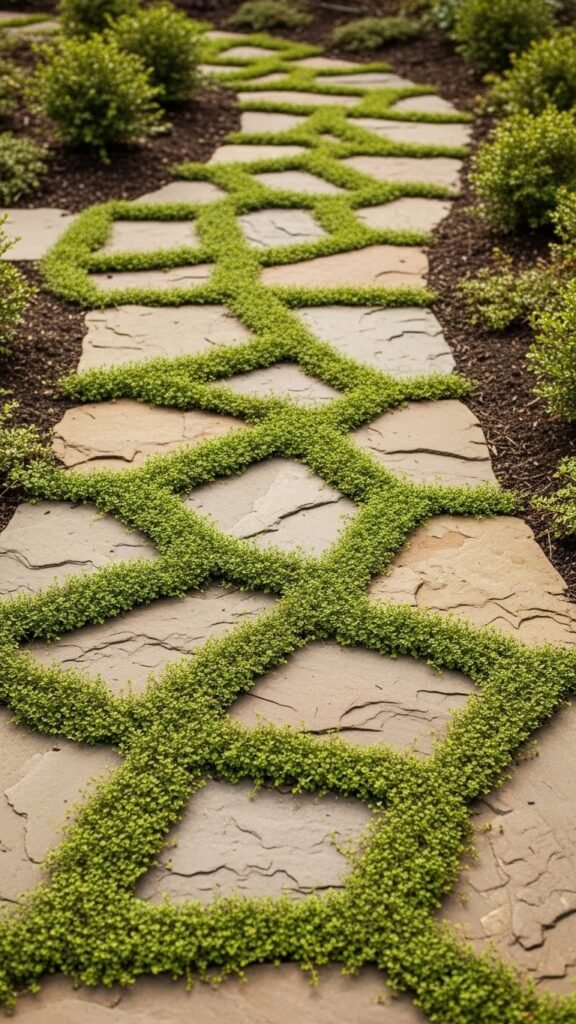
To soften the hard edges of a flagstone walkway, add low-growing plants or ground cover in the gaps between stones. Creeping thyme, moss, or other gentle plants can make a flagstone path feel more alive and integrated into your garden. This approach adds lushness without requiring much upkeep.
20. Smooth granite stone walkway for elegance and durability
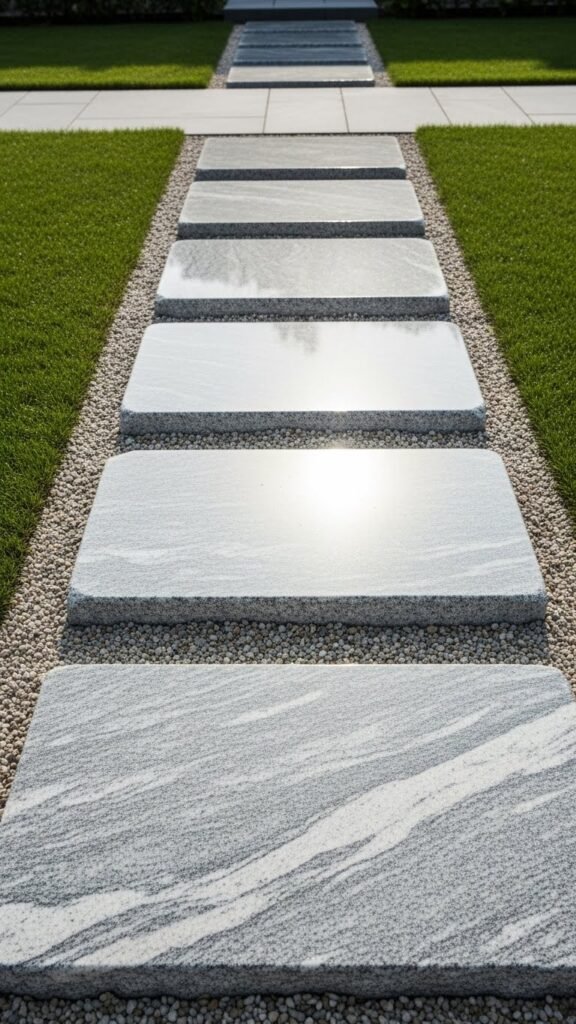
Smooth granite stones offer a polished and durable path that can suit many garden styles. Granite is long-lasting and holds up well to weather — making it a practical, elegant choice. Spacing granite stones over grass or gravel can give your garden an airy, spacious feel.
21. Stacked stone border with stone fill
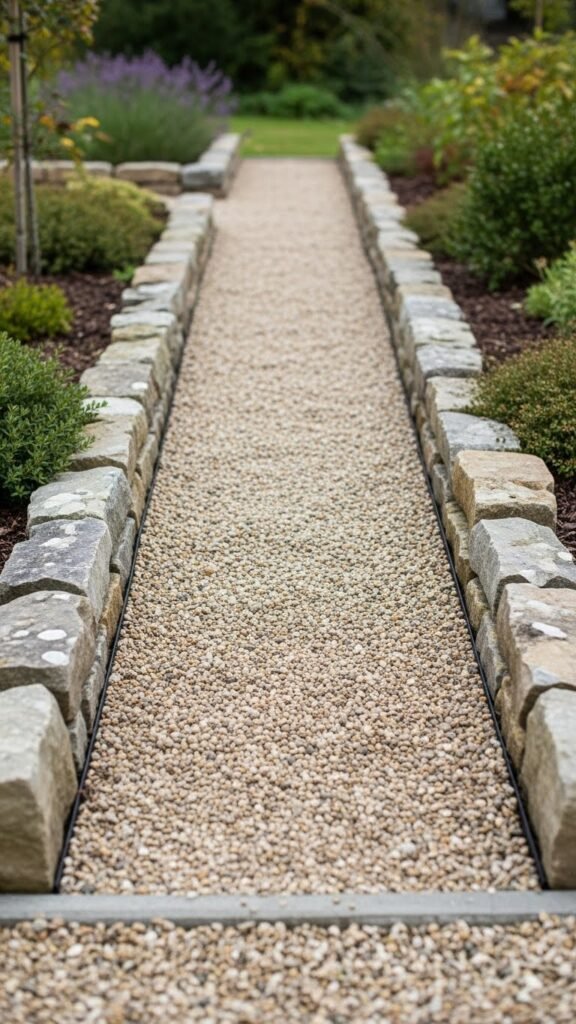
For a clearly defined path, you can stack stones along the edges and fill the center with smaller stones or gravel. This creates clean borders and helps prevent surrounding grass or soil from spilling over. It’s a simple, neat, and natural way to build a walkway.
22. Budget stepping stones on compacted soil
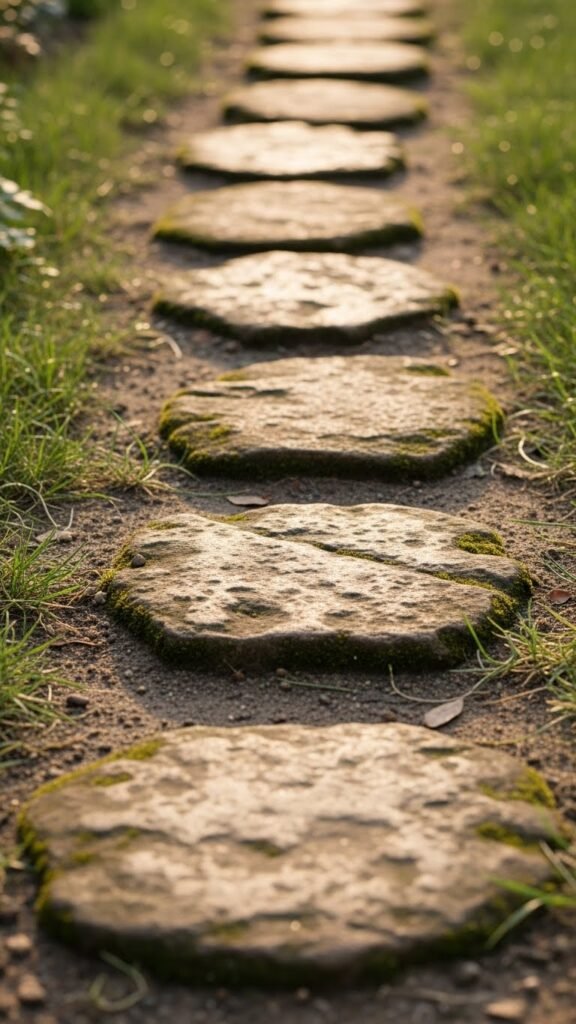
One of the cheapest ways to build a path: lay stepping stones directly onto compacted soil or dirt. You just need to flatten and compact the ground, then firmly place stones on top. For better stability and drainage, add gravel or sand around the stones. It preserves a natural garden look while being very budget-friendly.
23. Sandstone flagstone with wildflowers
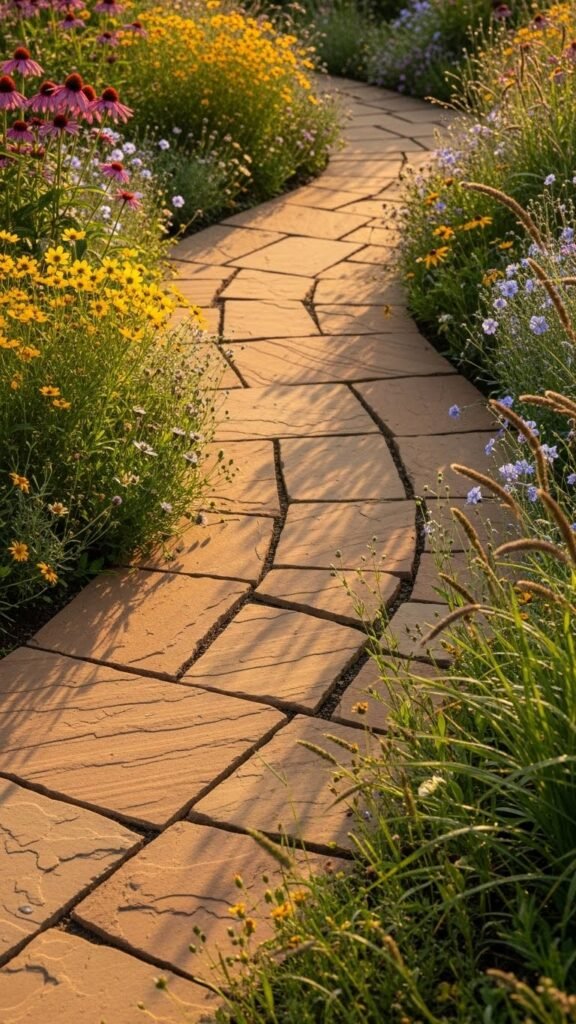
Sandstone flagstones, with their warm and natural color tones, look beautiful paired with wildflowers lining the edges of the path. This combination gives the walkway a soft, inviting, slightly rustic feel. Picking flat, sturdy pieces ensures safe walking, while seasonal wildflowers add color throughout the year.
24. Minimalist square stepping stones
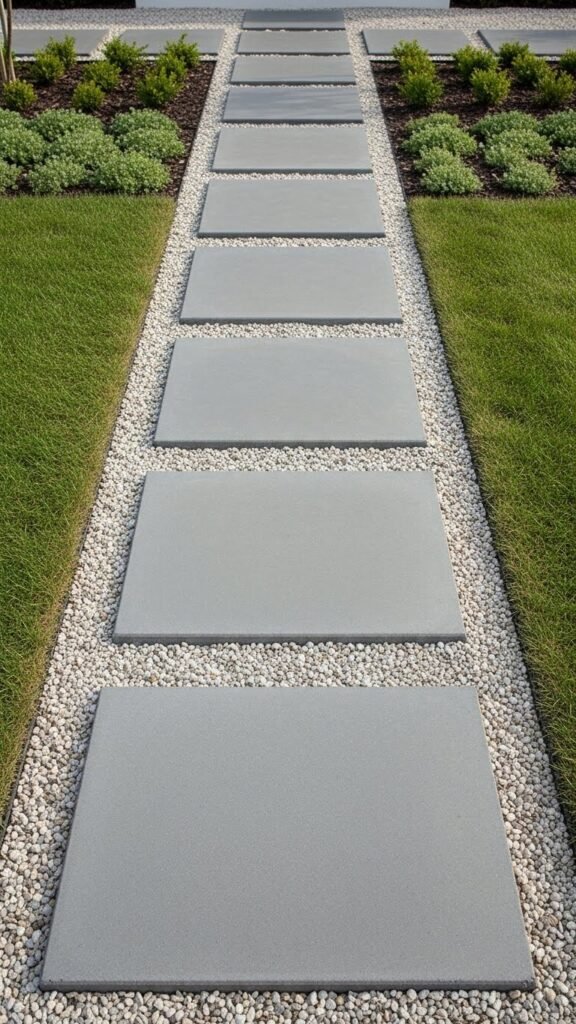
If you like modern simplicity, evenly spaced square stepping stones — with gravel or grass filling the gaps — give a neat, minimalist look. This style works well in contemporary gardens with clean lines and open spaces. It provides a subtle, yet structured path that guides movement in a calm, unobtrusive way.
25. Stone paver paths enhanced with lighting
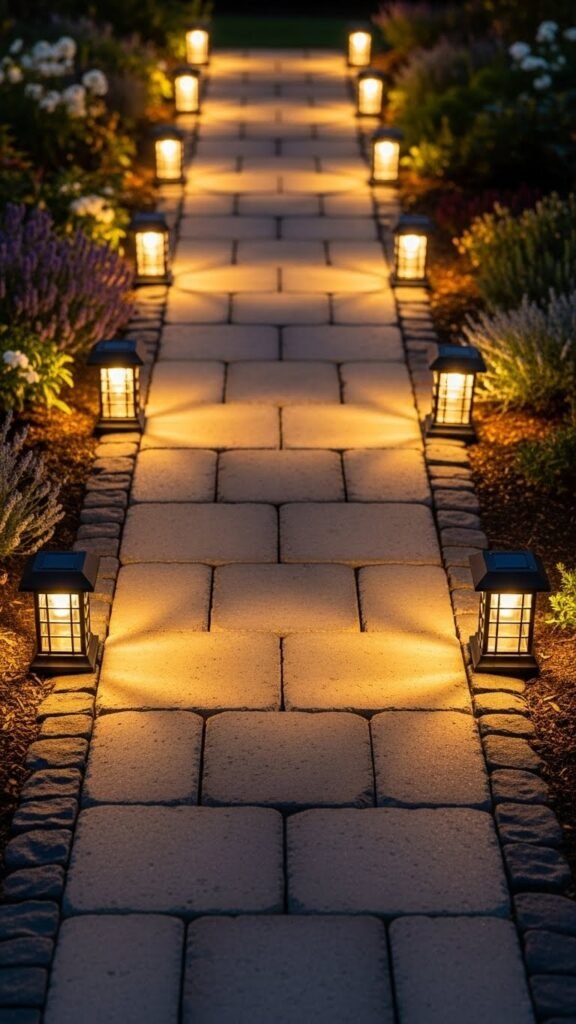
To make your walkway functional and beautiful at night, line a stone paver path with small solar or LED lights. This adds safety and a gentle glow that brings warmth to your garden after dark. The lighting also highlights the texture and color of the stones, making the path a feature in its own right.
26. Natural boulder borders with stones
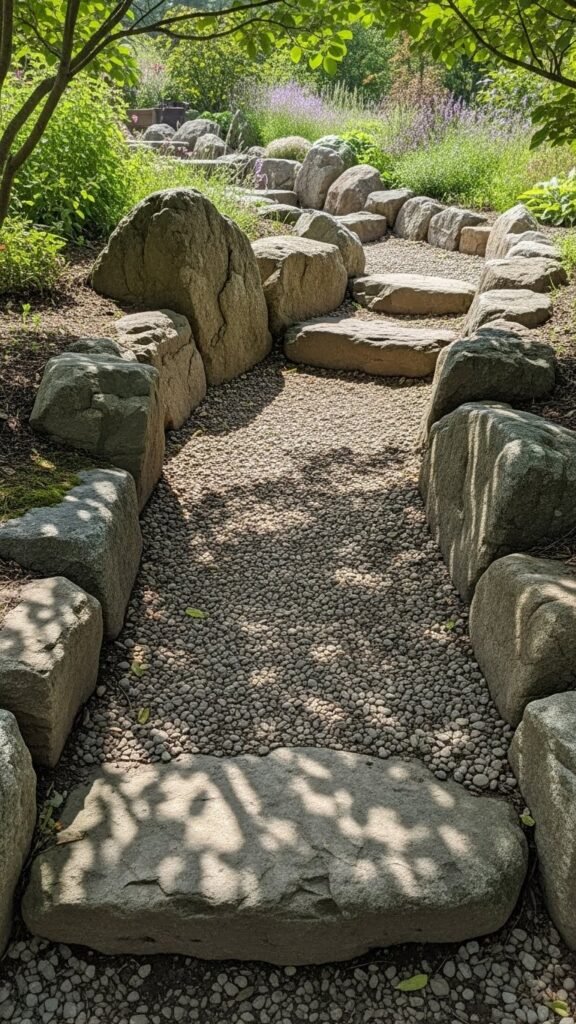
Use large natural boulders to define the edges of your walkway for a rugged, earthy aesthetic. Vary the size of the boulders to create a natural, unrefined border that fits well in rustic or woodland-style gardens. This approach is low maintenance and brings your garden closer to a natural landscape.
27. Stone path through a dry creek bed design
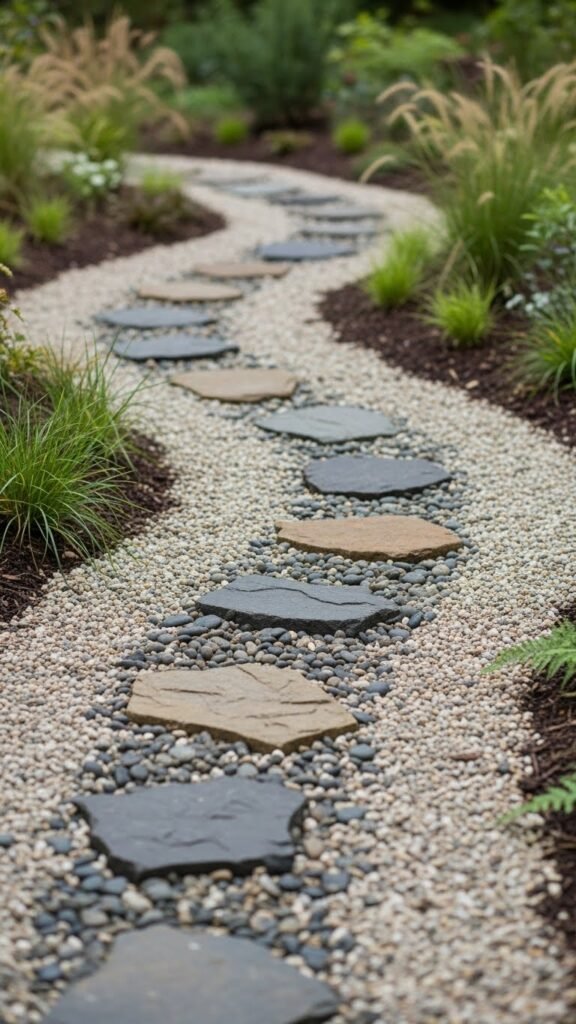
Laying flat stones in or across a dry creek bed — either vertically or horizontally — can mimic the feel of a natural water feature. Using darker stones against light gravel adds contrast and texture, giving your garden an organic, serene character. It’s a creative way to integrate landscaping features with your walkway.
28. Interlocking stone and brick patchwork walkway
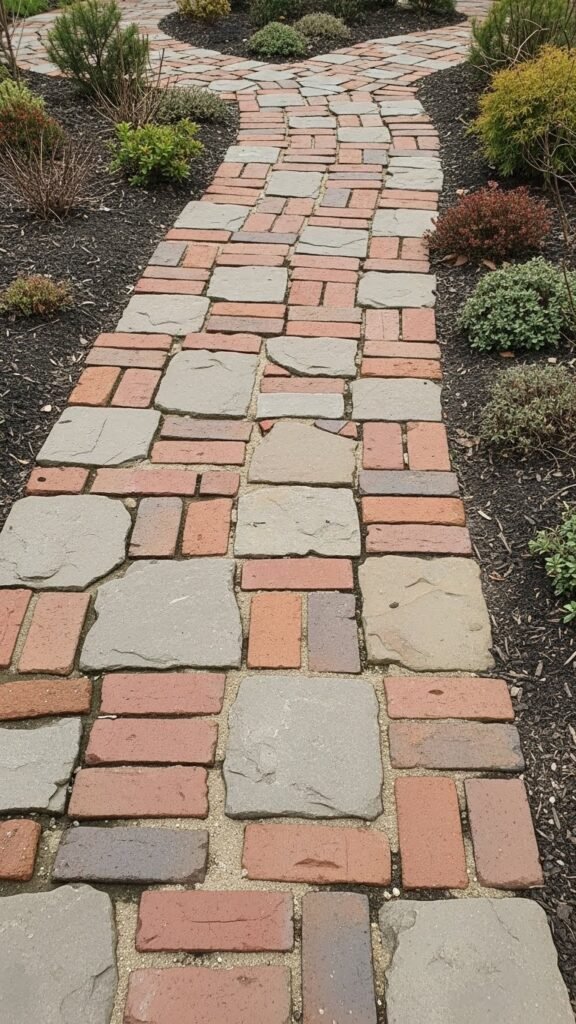
For a more artistic or playful walkway, combine stones and bricks in an interlocking pattern. Mixing shapes, sizes, and materials creates visual texture and individuality. Ensure the pieces are tightly set and fill the gaps with sand or mortar to keep the path comfortable and durable.
29. Stepping stones over a small pond
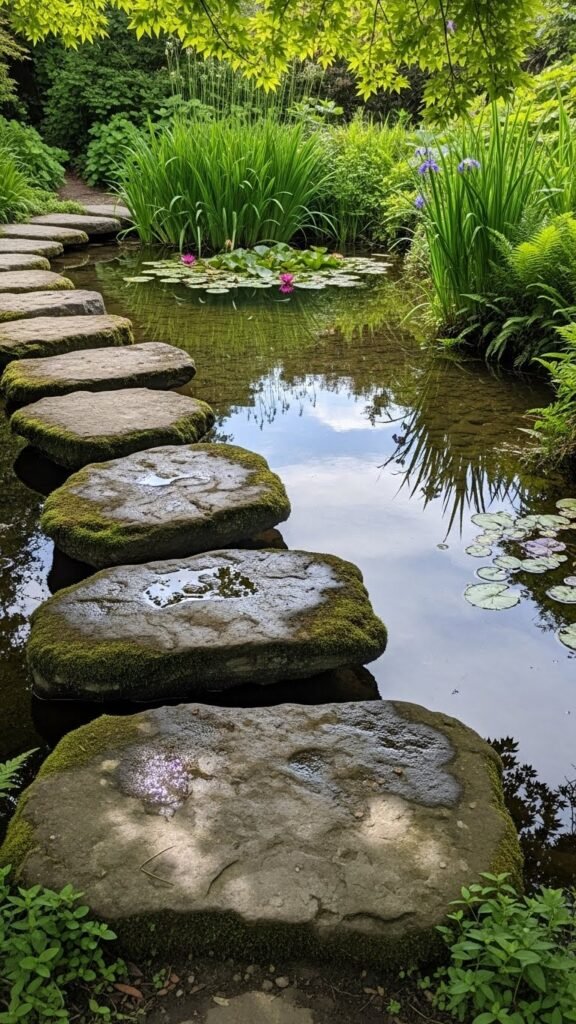
Want something whimsical? Place stable, flat stones across a small pond or water feature — turning it into a stepping-stone crossing. It’s functional, fun, and adds a touch of magic to your garden. Just make sure the stones are secure and walkable.
30. Wide stone slab walkway with defined edging
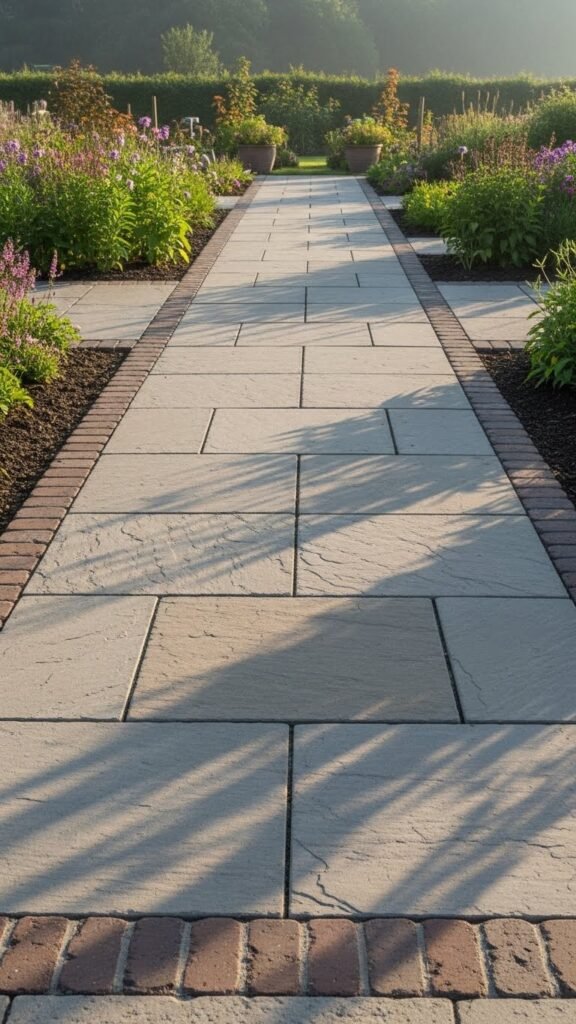
For maximum comfort and a clear path, use wide stone slabs with edging made of stones or bricks. The generous walking surface makes it easy to walk, even with wider steps or carrying items. The edging helps keep the path tidy and defined, giving a balanced, substantial look that matches both classic and modern garden styles.